

#Climate Action

The ability to provide resources to solve the problem is a key role for philanthropy: Elizabeth Yee, Rockefeller Foundation
Elizabeth Yee serves as the Rockefeller Foundation’s Executive Vice President for Programs, where she leads the foundation’s global initiatives, regional operations, partnerships, and learning & impact efforts. She joined the organization in 2019 as Managing Director for Climate and Resilience, later taking on the role of Chief of Staff. Prior to that, she held senior positions at 100 Resilient Cities and built a 17-year career in infrastructure finance with Morgan Stanley, Lehman Brothers, and Barclays, where she completed more than $30 billion worth of transactions.

Indonesia seeks stronger climate cooperation with Sweden for high-integrity carbon market
The Indonesian government, through the Ministry of Environment (KLH), is pushing for concrete cooperation with Sweden business community to accelerate emission reductions through Indonesia’s carbon economic value (NEK) framework.
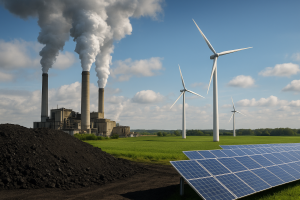
SMI allocates Rp26.9 trillion for renewable energy financing
State-owned infrastructure financing company PT Sarana Multi Infrastruktur or PT SMI has disbursed Rp26.9 trillion (US$1.6 billion) in financing for the new and renewable energy sector, making it the second-largest recipient of the firm’s funding commitments.

Global methane summit to launch initiative to curb super pollutants, accelerate climate action
Brazil, China, and the United Kingdom, co-hosts of the Global Methane Summit, are scheduled to launch a series of historic initiatives on Friday, November 14, 2025 to accelerate global action on methane and other non-CO₂ greenhouse gases to slow the pace of climate change.

Indonesia positions itself as global climate leader at COP30 in Brazil
Indonesia reaffirmed its position as a global climate leader during the United Nations Climate Change Conference (COP30) in Belém, Brazil, presenting a portfolio of concrete actions, measurable targets, and national policies designed to demonstrate what officials called “leadership by example.”
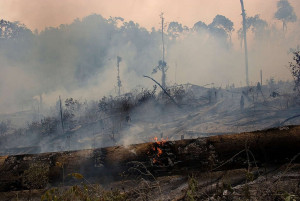
Indonesia’s first biennial transparency report maps US$282 B climate finance needs
Indonesia’s First Biennial Transparency Report (BTR) estimates that the country will require US$282 billion (Rp4,519 trillion) to support national climate actions through 2030that will cover both mitigation and adaptation efforts to meet the targets outlined in the country’s Nationally Determined Contribution (NDC).
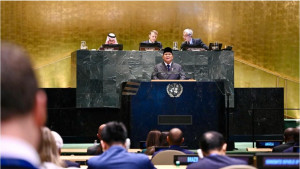
Prabowo vows stronger climate action, backs Paris goals
Clean energy campaigners have praised President Prabowo Subianto’s recent statement at the United Nations General Assembly that reaffirms Indonesia’s commitment to the Paris Agreement, but suggested that it be followed with more ambitious targets and energy transition policies, from laws and regulations to the National Electricity Supply Business Plan (RUPTL).

Prabowo talks with Michael Bloomberg on renewable energy, ocean protection
President Prabowo Subianto held a meeting with American business magnate and former New York City mayor Michael Bloomberg on the sidelines of the United Nations General Assembly (UNGA) in New York, the United States.
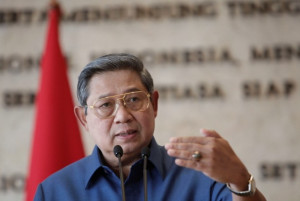
SBY addresses public lectures, voices concerns on pressing global issues
Sixth president of Indonesia, Susilo Bambang Yudhooyono (SBY), held a public lecture on Wednesday, July 30, 2025, commenting on world affairs in the spotlight and voicing concerns on pressing global issues.

FPCI launches Net-Zero Summit 2025 with a call to keep climate at the forefront
The Foreign Policy Community of Indonesia (FPCI) officially launched its annual climate summit, the Indonesia Net-Zero Summit (INZS) 2025, In Jakarta on Saturday, July 26, 2025, voicing the urgent need to prioritize climate action amid mounting global pressures − from geopolitical tensions to economic uncertainty and misinformation.

Environment ministry: Climate change must be tackled from individual level
Deputy for Climate Change Control and Carbon Economic Value Governance at the Ministry of Environment, Ary Sudijanto, emphasizes that addressing climate change would best start with individual behavioral changes.