

Markets and Finance

Indonesia to boost fish exports to Japan, China amid new U.S. tariffs
Indonesia will strengthen its fish exports to Japan and China following the implementation of new tariff policies announced by U.S. President Donald Trump.
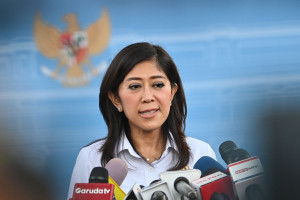
Komdigi faces Rp12.6 trillion budget gap for 2026 priorities
The Ministry of Communication and Digital Application (Komdigi) has proposed a budget of Rp20.36 trillion (US$1.3 billion) for 2026, but a joint letter of the Ministry of Finance and the National Development Planning Agency (Bappenas) said that Komdigi is only allocated an indicative ceiling of Rp7.75 trillion, leaving a shortfall of Rp12.61 trillion.
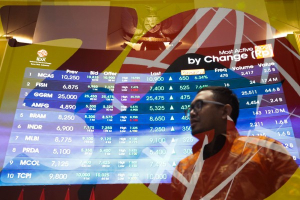
Jakarta composite index projected to reach 7,300 by year-end amid recovery signals
The Indonesian Composite Stock Index (IHSG) is projected to reach 7,300 by the end of 2025, with signs of recovery expected to emerge in the second quarter, according to BRI Danareksa Sekuritas.
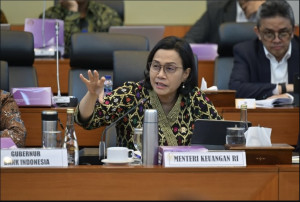
House, Finance ministers discuss 2026 Budget assumptions amid fiscal pressure
Finance Commission XI of the House of Representatives (DPR) held a hearing on late Thursday, July 3, 2025, with key economic leaders to review macroeconomic assumptions underlying the 2026 State Budget (APBN).
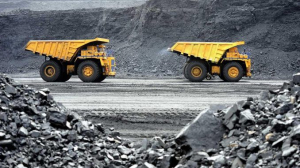
Indonesia to reinstate RKAB system to tackle oversupply, market manipulation
Minister of Energy and Mineral Resources (ESDM), Bahlil Lahadalia, has announced that the government will return to issuing annual mining work plan permits (RKAB) starting in 2026, in an effort to address oversupply, price instability, and poor regulatory oversight in the country’s mineral and coal sectors.

2026 energy budget proposals based on lower oil price assumptions amid global market shifts
Minister of Energy and Mineral Resources, Bahlil Lahadalia, proposes that the country's 2026 energy state budget be based on an Indonesian Crude Price (ICP) range of US$60–80 per barrel, citing declining global demand, oversupply, and geopolitical uncertainties.
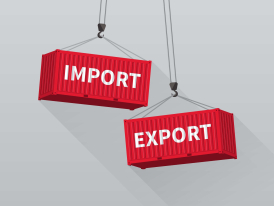
SimpleKey Group Niagi: Indonesia’s leader in global trade
Amid global economic shifts, Southeast Asia is becoming a new center of international trade. Indonesia, the largest economy in the region with a population of over 270 million, is confidently rising to the forefront, transforming into a strategic hub connecting East and West. At the forefront of this process is PT. SimpleKey Group Niagi, an Indonesian company setting new standards in global trade, supplying a wide range of products to over 40 countries.

Northstar-Ares merger flags concerns over foreign gains: Market analyst
A merger between venture capital firm Northstar Group and U.S.-based investment giant Ares Management Corp. has rekindled scrutiny over previous high-profile investment maneuvers in Indonesia.
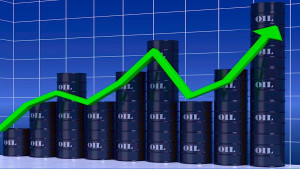
Middle East conflict pushes oil prices higher, shakes economic fundamentals
Minister of Finance Sri Mulyani Indrawati has sounded the alarm over rising geopolitical tensions in the Middle East, warning that the ongoing conflict between Iran and Israel has begun to reverberate through the global economy with oil prices surging and market volatility rising.

Balinese handicraft exporters adapt to shifting global trade, consumer trends
Once a consistent foreign exchange contributor, Bali’s woodcraft export industry is now navigating choppy waters in line with the cautious “wait-and-see” mode taken by American buyers following the increased import costs imposed by the United States government although the North American country has remained a major market for Balinese handicrafts.
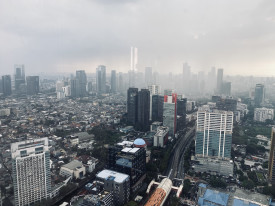
World Bank poverty line revision classifies 68.3 percent of Indonesians as poor
The World Bank has introduced a new global poverty threshold for upper-middle-income countries (UMICs), classifying Indonesians earning below US$8.30 (about Rp135,000) per day in 2021 PPP per month as poor and therefore suggesting 68.3 percent of the country’s population falls under the poverty line.
Israel-Iran war sends oil prices soaring, pressures Indonesia’s economy: Expert
The outbreak of war between Israel and Iran in June 2025 has triggered a dramatic spike in global oil prices, surpassing US$100 per barrel, sending shockwaves through energy-importing nations like Indonesia, placing immense pressure on the country’s State budget and simultaneously threatening inflation and currency stability, an expert says.