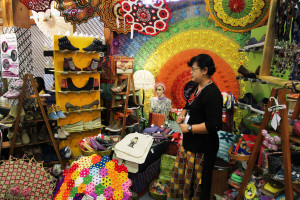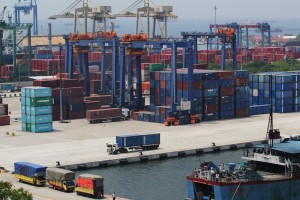



Once a consistent foreign exchange contributor, Bali’s woodcraft export industry is now navigating choppy waters in line with the cautious “wait-and-see” mode taken by American buyers following the increased import costs imposed by the United States government although the North American country has remained a major market for Balinese handicrafts.
“The global economy in 2025 is challenging. President Donald Trump’s decision to impose reciprocal tariffs has directly impacted our competitiveness in the United States market. Our products become more expensive due to the 32 percent import duties imposed,” Ketut Dharma Siadja, Chairman of the Bali chapter of the Association of Indonesian Handicraft Exporters and Producers (ASEPHI), spoke to Indonesia Business Post on Tuesday, June 17, 2025.
A combination of global trade policies and shifting consumer preferences has compelled exporters to recalibrate their strategies.
“There’s been a drop in revenue. Buyers are analyzing tariff structures before making any commitments. We’ve had to tighten our budgets and implement efficiency measures in anticipation of a potential recession or global crisis” Dharma said.
In response to the U.S. slowdown, ASEPHI Bali is pivoting to alternative markets. Japan is one key target, and the association plans to participate in trade exhibitions there later this year.
“We’re hoping for a smooth process. ASEPHI will support its members by securing free booth space at exhibitions in Japan,” Dharma cited.
Europe has also emerged as a promising destination due to its large population base and consumer tastes that align well with Balinese craftsmanship. The Middle East, however, remains a limited market due to mismatched aesthetic preferences.
To help members break into new markets, ASEPHI Bali facilitates participation in both domestic and international exhibitions.
“We’ve set up a dedicated committee to evaluate which members are ready with innovative products for exhibition. This platform is the best way to introduce new designs,” Dharma said.
Aside from geopolitics, changes in global lifestyle trends are reshaping the demand for traditional handicrafts. Younger generations − Generations X, Y, and Z − are placing more value on experiential spending, such as technology, travel, and food over decorative home goods.
“Today’s buyers prioritize functionality. Products must not only be beautiful, but also useful,” Dharma said. “Non-functional decorative pieces are no longer favored.”
This shift has forced artisans to rethink their approach. Traditional wooden sculptures once popular are now mostly confined to art shops catering to tourists brought in by travel agencies. In contrast, the export market remains more resilient than domestic retail, especially for products tailored to modern tastes.
Adaptive
While preserving traditional craftsmanship is vital, Dharma emphasized the need to evolve with market demands. Artisans are encouraged to collaborate with local industry agencies to innovate while staying rooted in their heritage.
“ASEPHI connects members with local government bodies like the Ministry of Industry or Cooperatives to provide resources and support,” he said.
Despite the current headwinds, Bali’s artisans are determined to keep their industry alive by adapting to regulation, reading market shifts, and embracing new consumer behavior.
“Handicraft will always have a soul, our job is to ensure it also has a place in the future market,” Dharma concluded.
Already have an account? Sign In
-
Start reading
Freemium
-
Monthly Subscription
20% OFF$29.75
$37.19/MonthCancel anytime
This offer is open to all new subscribers!
Subscribe now -
Yearly Subscription
33% OFF$228.13
$340.5/YearCancel anytime
This offer is open to all new subscribers!
Subscribe now
Set up email notifications for these topics