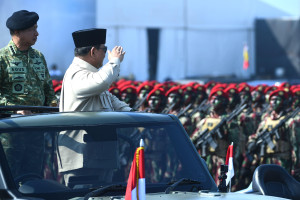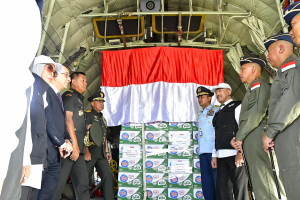



Indonesia’s defense establishment is preparing for one of its most aggressive territorial expansions in decades, with the Defense Ministry announcing plans to establish 150 new infantry battalions every year as part of a sweeping restructuring of the national security architecture.
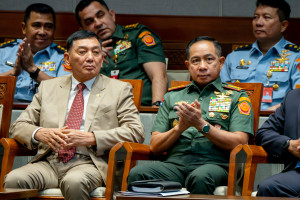
The initiative emerged during a hearing between DefenseMinister Sjafrie Sjamsoeddin, Indonesian Military (TNI)leadership, and Defense Commission I of the House of Representatives (DPR) at the parliamentary complex on Monday, November 24, 2025.
According to Sjafrie, the expansion is designed to meet what the government considers an “ideal security ratio” one battalion for each of Indonesia’s 514 regencies and cities.
“Starting in 2025, we began building this new force structure. As of this year, we already have 150 territorial development infantry battalions,” the minister said, referring to the units classified as Territorial Development Infantry Battalion.
He emphasized that the buildup, repeated annually at the same scale, is aimed at ensuring territorial integrity and securing national strategic assets, such as Pertamina refineries and fuel terminals, facilities deemed central to the country’s energy and economic sovereignty.
“This is not territorial overreach. It is about safeguarding national interests,” Sjafrie asserted.
One battalion, one regency
TNI chief General Agus Subiyanto echoed the urgency of expanding the territorial command, saying the current security apparatus is insufficient for the country’s vast administrative geography.
“We have 514 regencies, but slightly over 100 battalions. We aim for one battalion per regency,” Agus told reporters.
The commander also laid out ambitious restructuring plans for the Army’s territorial command hierarchy. By 2026, the TNI aims to operate 37 regional military commands (Kodam), one in each province. The number marks a dramatic jump from the existing 21 commands, following this year's addition of six new Kodam.
The expansion plan is also shaped by evolving security dynamics, especially in Papua, which the government has designated as one of three national defense “centers of gravity,” alongside Jakarta and Aceh.
Asked whether the designation was driven by escalating violence in the region, Agus responded bluntly: “Yes, there is an escalation of threats,” he said, nodding when pressed further about rising danger levels.
To counter transnational crimes and separatist activity, the TNI has stationed seven battalions specifically along Papua’s border. These units, Agus said, operate from newly upgraded, fully habitable outposts to support long-term deployments and intensified surveillance.
Smart approach
Defense Minister Sjafrie added that the military will adopt what he called a “Smart Approach” in Papua a calibrated blend of territorial engagement and tactical enforcement. The strategy combines soft approach efforts to build community trust with hard approach operations targeting armed separatist groups.
As Indonesia continues to project stronger territorial presence nationwide, policymakers acknowledge that the plan marks a new era in how the state defines and secures its defenseperimeter an era shaped not only by geography but by an increasingly complex security environment.
The meeting was attended by Defense Minister SjafrieSjamsoeddin, TNI Commander General Agus Subiyanto, Air Force Chief of Staff Air Chief Marshal Tonny Harjono, Deputy Navy Chief of Staff Vice Admiral Erwin S. Aldedharma, and Deputy Army Chief of Staff LieutenantGeneral Saleh Mustafa attended the closed-door session.
Already have an account? Sign In
-
Start reading
Freemium
-
Monthly Subscription
20% OFF$29.75
$37.19/MonthCancel anytime
This offer is open to all new subscribers!
Subscribe now -
Yearly Subscription
33% OFF$228.13
$340.5/YearCancel anytime
This offer is open to all new subscribers!
Subscribe now
Set up email notifications for these topics