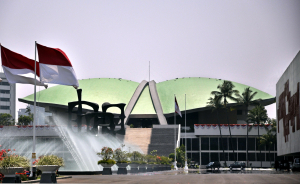


The government and the House of Representatives (DPR) have agreed to overhaul Indonesia’s economic growth strategy, shifting away from debt-driven expansion toward a revenue-based approach. Legislators expect the change to push growth to between 7–8 percent in the medium term.
Chair of the House Budget Committee (Banggar) Said Abdullah announced the agreement during the House’s fifth plenary session of the 2025–2026 sitting period on Tuesday, September 23, 2025.
“The House Budget Committee, together with the government, has agreed to a crucial medium-term scheme: Transforming Indonesia’s growth strategy from debt-based to revenue-based,” Said Abdullah told lawmakers.
As part of the new direction, he asked the Finance Ministry to prepare a comprehensive debt management roadmap to achieve fiscal balance in the 2026 State Budget (APBN).
“With this shift, the 2026 budget must be positioned as a state instrument to face an ever-changing global landscape,” he said.
Fiscal responsibility at the core
Said Abdullah, a senior politician from the 2024 election’s top gainer Indonesian Democratic Party of Struggle (PDI-P), warned that fiscal policy must not fall into “narratives that appear true and logical but in fact disguise falsehoods.”
He emphasized that whether the 2026 State Budget becomes a strong tool depends largely on the government’s execution.
Despite such concerns, he stressed that the budget draft had been thoroughly examined by all parliamentary commissions.
“From Commission I to Commission XIII, and culminating in Banggar, the deliberation of the 2026 budget has gone through a deep process. While no work of man is perfect, we have made every effort to ensure this budget can turn challenges into opportunities,” he said.
The shift in strategy is seen as a major recalibration of Indonesia’s fiscal policy under President Prabowo Subianto’s administration.
The government is expected to follow up by drafting policies that reduce reliance on borrowing while maximizing state revenues to finance development.
Already have an account? Sign In
-
Start reading
Freemium
-
Monthly Subscription
20% OFF$29.75
$37.19/MonthCancel anytime
This offer is open to all new subscribers!
Subscribe now -
Yearly Subscription
33% OFF$228.13
$340.5/YearCancel anytime
This offer is open to all new subscribers!
Subscribe now
Set up email notifications for these topics