

Finance Commission XI of the House of Representatives (DPR) has approved the government's proposed 2026 economic growth target, setting the figure between 5.2 and 5.8 percent, higher than the 5 percent projected for 2025.
The approved target remains consistent with the government’s earlier proposal in the 2026 Macroeconomic Framework and Fiscal Policy Guidelines (Kerangka Ekonomi Makro dan Pokok-Pokok Kebijakan Fiskal or KEM-PPKF).
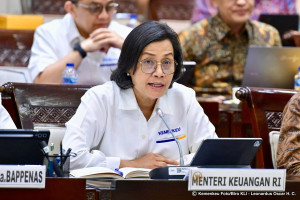
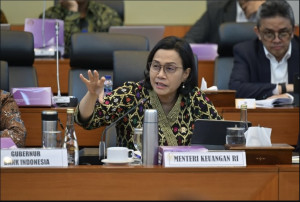
The approval was announced during a hearing on Monday, July 7, 2025, involving the Finance Ministry, the National Development Planning Agency (Bappenas), the Indonesian Central Bank (BI), and the Financial Services Authority (OJK).
“With agreement from the Finance Ministry, the Central Bank Governor, and the OJK Board of Commissioners, all conclusions from the working committee have been formally approved at this evening’s session,” Mukhamad Misbakhun, Commission XI Chairman, said.
In addition to the economic growth assumption, lawmakers also endorsed other national development targets for 2026, including poverty and unemployment reduction goals as outlined in the KEM-PPKF.
Deputy Chairman of Commission XI and Head of the Economic Growth Working Committee, Mohammad Haekal, said that the growth target was set after taking into account current global and domestic dynamics, as well as economic projections and risk factors.
“Considering opportunities ahead, risks, and policy measures adopted by major economies, Indonesia’s growth in 2026 is expected to reach 5.2 to 5.8 percent,” Haekal said.
State budget plan
The approved economic assumption will serve as a key parameter for drafting the 2026 State Budget (RAPBN). In line with the growth target, fiscal policy for the upcoming year is expected to remain expansionary yet targeted and measured aimed at supporting economic momentum while ensuring fiscal sustainability.
To achieve the 2026 target, the government has laid out several strategic approaches. These include:
- Expenditure-side policies, such as stimulating household consumption and boosting exports and imports;
- Production-side initiatives, notably supporting growth in the Accommodation and Food & Beverage sector, which is projected to expand by 9.2–9.7 percent;
- Regional development programs, including a performance-based transfer-to-region (TKD) system to encourage productive spending at the local level;
- Poverty reduction goals, with a specific emphasis on eradicating extreme poverty − targeting a reduction to zero percent by 2026.
The government believes that with synchronized efforts between national and regional development strategies, the economy can maintain resilience and inclusivity amid global uncertainties.
Already have an account? Sign In
-
Start reading
Freemium
-
Monthly Subscription
20% OFF$29.75
$37.19/MonthCancel anytime
This offer is open to all new subscribers!
Subscribe now -
Yearly Subscription
33% OFF$228.13
$340.5/YearCancel anytime
This offer is open to all new subscribers!
Subscribe now
Set up email notifications for these topics