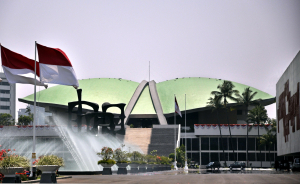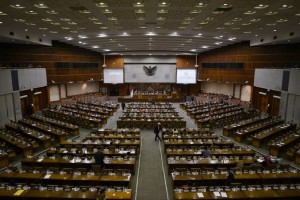



Finance Commission XI of the House of Representatives (DPR) has approved the indicative budget ceiling for the Finance Ministry in the 2026 draft state budget, withholding endorsement of an additional Rp 4.88 trillion (US$296 million) requested by Finance Minister Sri Mulyani Indrawati, pending further efficiency reviews.
The approved budget stands at Rp 47.13 trillion (US$2.95 billion) out of the ministry’s total Rp52.02 trillion proposal, with legislators calling for a more frugal approach in line with national fiscal policy objectives for 2026.
"Commission XI requests the Finance Ministry to optimize and make efficient the additional Rp 4.88 trillion budget proposal in preparing the detailed budget (RKA K/L), in accordance with the government’s 2026 spending efficiency directive," Commission XI Chair Mukhamad Misbakhun said during the hearing at the parliament complex in Jakarta on Tuesday, July 15, 2025.
In response, Sri Mulyani accepted the recommendation with a nod to its broader implications. “I appreciate this mandate, and I will apply the same principle of efficiency when dealing with budget proposals from all Commissions I to XIII,” she said, adding that this stance would set a good precedent across ministries.
The former World Bank managing director reaffirmed the government's commitment to continuing fiscal efficiency measures initiated in 2025. "We agree that the efficiency approach for 2025 must be sustained into 2026," she stated.
The Finance Ministry has already implemented internal budget blocks as part of its austerity efforts in 2025, and Sri Mulyani assured lawmakers that this discipline would remain intact moving forward.
However, Sri Mulyani emphasized that the additional Rp4.88 trillion was requested to support the operations of newly established directorates under the Finance Ministry, which were mandated by President Prabowo Subianto.
These include the Directorate General of Economic and Fiscal Strategy (DJSEF), the Directorate General of Financial Sector Stability and Development (DJSPSK), and the Financial Intelligence and Technology Agency (BATI).
“The additional budget mainly supports revenue-generating functions, such as tax, customs, and excise operations, and includes vital upgrades to our IT systems. Nonetheless, we take Parliament’s message seriously, we will continue to model budget discipline and efficiency,” Sri cited.
Already have an account? Sign In
-
Start reading
Freemium
-
Monthly Subscription
20% OFF$29.75
$37.19/MonthCancel anytime
This offer is open to all new subscribers!
Subscribe now -
Yearly Subscription
33% OFF$228.13
$340.5/YearCancel anytime
This offer is open to all new subscribers!
Subscribe now
Set up email notifications for these topics