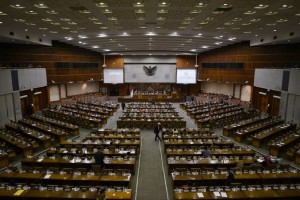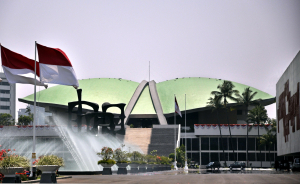



Finance and monetary Commission XI of the House of Representatives (DPR) and the government have reached a consensus to raise the tax revenue target in the 2026 State Budget Bill (RAPBN), aiming to strengthen the country’s fiscal foundation through ongoing revenue reform.
Under the agreement, the tax-to-GDP ratio is set to reach between 10.08 percent and 10.54 percent in 2026 an increase from the government’s initial proposal of 10.45 percent outlined in the Macroeconomic Framework and Fiscal Policy Principles (KEM-PPKF). Consequently, total state revenue is projected to climb to between 11.71 percent and 12.31 percent of GDP.
Director General of Economic and Fiscal Policy at the Finance Ministry, Febrio Nathan Kacaribu, emphasized that the higher target is in line with the government’s broader revenue reform strategy.
“Our direction remains clear: improving state revenue is a key part of fiscal reform,” Febrio told reporters after the budget meeting at the Parliamentary building on Thursday, July 24, 2025.
He noted that all economic sectors will be expected to contribute proportionally to the increased target, in line with their GDP share.
“The idea is to ensure all sectors play a role. Historically, sectors with a larger GDP share such as manufacturing tend to contribute more to tax revenues,” he said.
He added that the manufacturing sector, in particular, remains one of the most significant contributors to tax receipts due to its central role in the national economy.
A key driver behind the raised target is an upward revision in the customs and excise revenue target, which is now projected at 1.18 percent to 1.30 percent of GDP, up from the previous range of 1.18 percent to 1.21 percent proposed in the KEM-PPKF.
Chairman of the House’s Revenue Working Committee, Mukhamad Misbakhun, cited that the increase stems from the planned introduction of new excise objects most notably sweetened packaged beverages (MBDK) as well as a broader export duty base that will include gold and coal products, following new technical regulations from the Energy and Mineral Resources Ministry (ESDM).
The inclusion of new excise items and the expanded scope of export duties reflect the government’s push to diversify revenue sources without relying solely on traditional tax bases.
The agreed-upon targets mark another step in Indonesia’s ongoing efforts to reform its tax system, improve compliance, and create a more sustainable fiscal framework.
However, execution will depend heavily on the government's ability to balance policy ambition with effective implementation especially in sectors that remain under-taxed or face significant administrative challenges.
Already have an account? Sign In
-
Start reading
Freemium
-
Monthly Subscription
20% OFF$29.75
$37.19/MonthCancel anytime
This offer is open to all new subscribers!
Subscribe now -
Yearly Subscription
33% OFF$228.13
$340.5/YearCancel anytime
This offer is open to all new subscribers!
Subscribe now
Set up email notifications for these topics