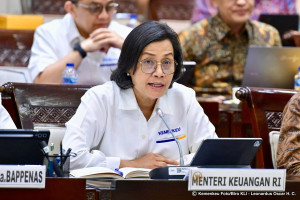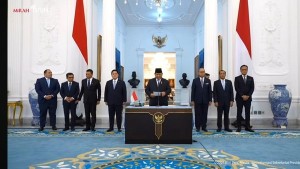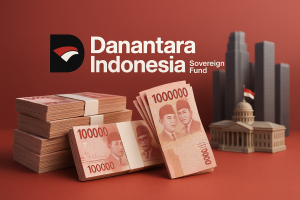



The House of Representatives’ (DPR) Finance Commission XI is pushing to revise Law No. 9/2018 on Non-Tax State Revenue (PNBP), citing the shrinking scope of income sources and the need to adapt to changing fiscal realities, particularly after dividends from State-owned enterprises (SOEs) were reclassified under the government’s sovereign wealth fund, Danantara.
Head of Commission XI, Mukhamad Misbakhun, said the revision aims to expand and refine the types of assets and activities that qualify as PNBP, particularly in sectors that remain untapped, such as rare earth elements and other strategic minerals.
“There are natural resources that have long been overlooked in our revenue system, such as rare earths. Even copper will only be included in the Simbara system by 2026,” Misbakhun said during a hearing at the House building complex in Jakarta on Thursday, May 8, 2025.
He noted that the government must also begin capturing windfall profits from surging commodity prices or exchange rate fluctuations, revenues that are currently transferred to the state treasury but not formally recorded as PNBP.
“To this day, we still don’t know under what object these windfalls are categorized. They’re not part of natural resource production, but they enter the state’s cash flow. The question is, under which legal authority are we collecting them?” he said.
Misbakhun added that improving the legal structure around PNBP is urgent, especially as ministries and public service agencies (BLUs) continue to manage their own paid services without standardized oversight or reporting mechanisms.
He criticized the current role of the Finance Ministry, particularly the Directorate General of Budget, as unclear under the existing law.
“Is the Ministry of Finance merely a recorder, a compiler of administrative data? Or does it play a supervisory and evaluative role in this system? That needs to be clarified in the law revision,” he said.
The commission also urged a review of how PNBP tariffs are determined across government institutions, emphasizing the lack of coordination and transparency in setting rates for public services and natural resource usage.
A central issue driving the revision is the changing status of state-diverted revenues. With SOE dividends no longer counted as State income, but instead directed to Danantara, the law’s definition of "state-separated wealth" must be reevaluated.
“We’ve mixed up categories. It’s like putting different types of PNBP in the same place without considering their specific characteristics, like a unisex public restroom,” Misbakhun remarked.
“Each type has its own legal and administrative requirements. That must be clearly defined,” he added.
The planned revision, if passed, would mark a significant restructuring of Indonesia’s non-tax revenue framework, potentially boosting transparency, enforcement, and state income from strategic sectors long overlooked by current regulations.
Already have an account? Sign In
-
Start reading
Freemium
-
Monthly Subscription
20% OFF$29.75
$37.19/MonthCancel anytime
This offer is open to all new subscribers!
Subscribe now -
Yearly Subscription
33% OFF$228.13
$340.5/YearCancel anytime
This offer is open to all new subscribers!
Subscribe now
Set up email notifications for these topics