

#Debt

Prabowo credits predecessor's foreign investment efforts, denies political influence
President Prabowo Subianto on Thursday inaugurated PT Lotte Chemical Indonesia, a Rp 65 trillion ($4 billion) petrochemical complex in Cilegon, Banten, marking one of Indonesia’s largest South Korean investment projects.
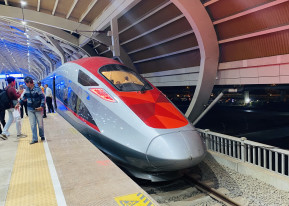
President assures stability in Whoosh project amid rising debt concerns
President Prabowo Subianto has assured the public that the government will resolve the financial difficulties plaguing the Whoosh Jakarta–Bandung high-speed train project.
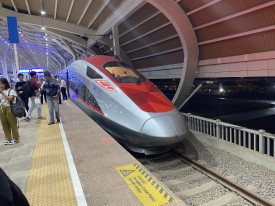
Jakarta-Bandung high-speed rail a ‘ticking time bomb’ amid mounting debt: KAI
State-owned railway operator PT Kereta Api Indonesia (KAI) has raised an alarm over the financial strain posed by the Jakarta-Bandung high-speed rail (KCJB), warning lawmakers that the multibillion-dollar project has become a “ticking time bomb” unless urgent debt restructuring is carried out.

Indonesia’s paylater debt reaches Rp31.55 T in June amid post-Ramadan surge
Indonesia’s total paylater debt soared to Rp31.55 trillion (US$1.9 billion) in June 2025, continuing its upward trajectory following the Idul Fitri celebrations at the end of March.
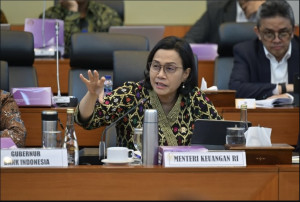
House, Finance ministers discuss 2026 Budget assumptions amid fiscal pressure
Finance Commission XI of the House of Representatives (DPR) held a hearing on late Thursday, July 3, 2025, with key economic leaders to review macroeconomic assumptions underlying the 2026 State Budget (APBN).
Indonesia’s external debt reaches US$431.5 B in April, driven by public sector growth
The Indonesian Central Bank (BI) reveals that the country’s external debt stood at US$431.5 billion (Rp7,029 trillion) as of April 2025, reflecting an 8.2 percent increase year-on-year (YoY) and showcasing a higher growth rate compared to 6.4 percent YoY recorded in March.
Government debt projected to reach 40.1 percent of GDP in 2025: World Bank
Indonesia’s public debt is expected to rise significantly to 40.1 percent of gross domestic product (GDP) in 2025, up from an estimated 29.2 percent in 2024, the World Bank said in its April 2025 report.