


The Indonesian Central Bank (BI) reveals that the country’s external debt stood at US$431.5 billion (Rp7,029 trillion) as of April 2025, reflecting an 8.2 percent increase year-on-year (YoY) and showcasing a higher growth rate compared to 6.4 percent YoY recorded in March.
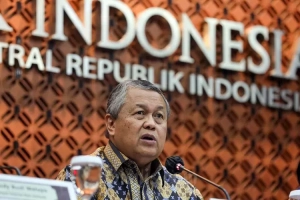
Executive Director of BI’s Communication Department, Ramdan Denny Prakoso, said the increase in external debt primarily stemmed from the public sector.
“The rise in Indonesia’s external debt was also influenced by the weakening of the U.S. dollar against most global currencies,” Ramdan said on Monday, June 16, 2025.
Government external debt climbed to US$208.8 billion, showing a 10.4 percent YoY growth, up from 7.6 percent in March. This surge was largely driven by new loan disbursements and increased foreign inflows into domestic government securities (SBN) − a result of growing investor confidence in Indonesia’s economic prospects.
“The government remains committed to maintaining its credibility by managing external debt in a prudent, measured, and transparent manner,” Ramdan noted.
External borrowing continues to serve as one of the key instruments in financing the State Budget (APBN). The debt has been channeled to support critical sectors such as:
● Health and social services (22.3 percent);
● Government administration and defense (18.7 percent);
● Education (16.4 percent);
● Construction (12.0 percent);
● Transportation and warehousing (8.7 percent);
● Notably, 99.9 percent of government external debt is long-term, underscoring a strategy focused on sustainability and risk management.
In contrast, private sector external debt was recorded at US$194.8 billion, experiencing a 0.6 percent YoY contraction − an improvement from a 1.0 percent contraction in March. The decline was mainly observed in non-financial sectors, although financial institutions posted a 2.9 percent YoY growth, bouncing back from a previous downturn.
Menwhile, private sector debt continues to be heavily concentrated in manufacturing, financial services and insurance, electricity and gas supply, as well as mining and quarrying.
These four sectors collectively account for 80 percent of total private external debt, with 76.9 percent being long-term liabilities.
BI emphasized that the structure of Indonesia’s external debt remains healthy, with a debt-to-GDP ratio declining slightly to 30.3 percent in April, compared to 30.6 percent in March. Overall, 85.1 percent of the country’s external debt consists of long-term obligations, reflecting a commitment to financial stability and risk mitigation.
BI and the government reiterated their efforts to maintain a sound debt structure through coordinated monitoring, aiming to optimize the role of external borrowing in sustainable development financing, while minimizing potential threats to national economic stability.
Tag
Already have an account? Sign In
-
Start reading
Freemium
-
Monthly Subscription
20% OFF$29.75
$37.19/MonthCancel anytime
This offer is open to all new subscribers!
Subscribe now -
Yearly Subscription
33% OFF$228.13
$340.5/YearCancel anytime
This offer is open to all new subscribers!
Subscribe now
Set up email notifications for these topics