


Lawmakers have called on the government to take a cautious and well-planned approach to its long-discussed rupiah redenomination plan, warning that premature execution without adequate preparation could lead to confusion, price manipulation, and even inflationary shocks.
House of Representatives Budget Committee (Banggar) chairman Said Abdullah said the policy must be implemented only after Indonesia achieves sustained economic, political, and social stability.
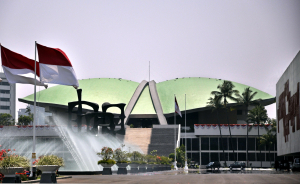
“Redenomination requires several prerequisites −foremost among them, stable economic growth as well as political and social stability,” Said told reporters at the parliamentary complex in Senayan, Jakarta, on Tuesday, November 11, 2025.
He underscored that the government must ensure full technical readiness before implementation, stressing that the move should not be mistaken for a symbolic or cosmetic gesture. “Do not think redenomination is merely about removing three zeros from the currency,” he said.
Said warned that an abrupt redenomination process could expose the economy to price manipulation by unscrupulous traders and potentially fuel inflationary pressure if businesses exploit the transition period.
“That potential for price manipulation is our biggest concern at the Budget Committee,” he said.
To prevent such risks, he urged the government to conduct an intensive public education campaign before any formal deliberations begin.
“If the plan is for 2027, then in 2026 the government must intensively socialize the policy so the public shares the same understanding. Only then should internal preparations and formal discussions of the bill proceed,” Said noted.
Echoing Said’s view, House’s Fiscal and Monetary commission XI chairman Mukhamad Misbakhun said the redenomination should be implemented gradually to minimize economic disruptions and ensure smooth public adaptation.
“We want this policy to be implemented carefully and without causing disruption on the ground. The main focus must be on the clarity of stages and public readiness,” Misbakhun said in Jakarta on Tuesday, November 11, 2025.
He called on the government to design a clear roadmap, outlining the transition from old to new currency and the timeline for implementation.
Misbakhun also emphasized the importance of public education, particularly for small and medium enterprises (SMEs) that would be directly affected by price adjustments.
“Public understanding will be key. The transition must be well communicated so that it does not cause confusion in transactions,” he said.
To ensure smooth implementation, Misbakhun proposed that Indonesian Central Bank (BI) conduct limited pilot projects before full-scale enforcement.
“The most important thing is that BI must ensure inflation stability and maintain the integrity of the payment system throughout the transition,” he added.
He said further that the House is ready to deliberate the Redenomination Bill (RUU Redenominasi Rupiah), which will simplify nominal values such as changing Rp1,000 to Rp1, as part of efforts to modernize Indonesia’s financial system.
“We welcome the redenomination plan, provided that every technical, transitional, and public readiness aspect is thoroughly prepared,” he said. “The House is committed to ensuring this policy benefits the economy and does not create additional burdens on the public.”
Roadmap
The government, through the Finance Ministry and BI, has revived the redenomination plan, confirming that the Draft Law on Rupiah Value Adjustment has been included in the 2025–2029 Medium-Term National Legislation Program (Prolegnas) as a government initiative.
Finance Minister Purbaya Yudhi Sadewa has set a target for the bill’s completion by 2026–2027, according to the Finance Ministry’s Strategic Plan (PMK No. 70/2025).
The regulation highlights that redenomination aims not merely to simplify large nominal figures but to enhance economic efficiency, strengthen competitiveness, support growth stability, and reinforce the rupiah’s credibility as a reflection of Indonesia’s purchasing power.
The Directorate General of Treasury has been tasked with leading the drafting and coordination of the legislation.
A long delayed policy in the making
Redenomination has been on the table for over a decade. The initiative first emerged in 2010 under then-Finance Minister Agus Martowardojo, who proposed removing three zeros from rupiah banknotes for example, converting Rp1,000 to Rp1 without changing real value or purchasing power.
The plan entered the 2013 priority legislative program but was later shelved.
A 2017 Treasury Review identified four key benefits of redenomination:
1. Simplified transactions and accounting systems, particularly for large enterprises with technical limits;
2. Reduced human error in financial reporting;
3. More precise monetary policy and inflation control; and
4. Lower printing and circulation costs for currency.
Economists argue that redenomination, if executed carefully, could bolster market confidence in the rupiah and signal macroeconomic stability, especially amid persistent volatility in the U.S. dollar and global financial markets.
While the policy will not alter the real value of goods or the purchasing power of money, it could reshape price perception among consumers.
However, lawmakers continue to stress that timing and transparency will determine the policy’s success.
“The key is preparation and transparency. The policy can succeed only if the public trusts that its purpose is purely economic, not political,” Said Abdullah concluded.
Already have an account? Sign In
-
Start reading
Freemium
-
Monthly Subscription
20% OFF$29.75
$37.19/MonthCancel anytime
This offer is open to all new subscribers!
Subscribe now -
Yearly Subscription
33% OFF$228.13
$340.5/YearCancel anytime
This offer is open to all new subscribers!
Subscribe now
Set up email notifications for these topics