


The release of Indonesia’s 10-year power grid plan, RUPTL 2025-2034, has sparked considerable debate as it indicates that while there is substantial growth projected for renewable energy, fossil fuels will still hold a significant place in the nation's energy landscape.
A report by the Center for Research on Energy and Clean Air (CREA) reveals that, despite the nation’s climate commitments and President Prabowo Subianto’s announcement of a 100 percent renewable energy transition by 2035, fossil fuels remain firmly embedded in the country’s energy framework. The report scrutinizes Indonesia's state power supplier PLN’s recently published RUPTL 2025-2034, and highlights critical concerns about the energy transition trajectory.
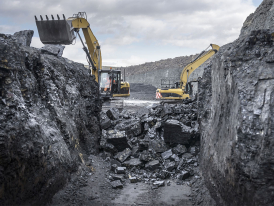
According to the RUPTL, 59.2 gigawatts (GW) of new generation capacity will be added to Indonesia’s power grid by 2034. This includes 16.6 GW from coal and gas and 42.1 GW from renewables, of which 24.3 GW will come from variable renewable energy (VRE), including solar and wind, while 17.8 GW will stem from dispatchable sources like hydro, geothermal, and bioenergy.
Although the renewables share of the plan appears promising, the 2030 target for renewable capacity has been lowered to 18.6 GW, compared to the 20.9 GW target set in the previous 2021-2030 plan.
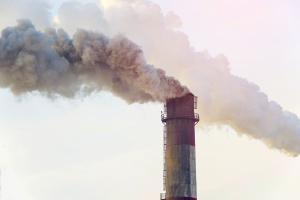
The report says that a troubling aspect of the RUPTL 2025-2034 is the late addition of 30.4 GW of renewables, planned for the years 2030-2034, which could significantly delay Indonesia's progress in reducing reliance on fossil fuels. Further complicating matters, 2.8 GW of coal plants are also scheduled to come online between 2030 and 2033. This has led to concerns that the country could end up locked into a fossil fuel-dominated power grid for decades, making future transitions more difficult and costly.
"Indonesia's latest RUPTL clearly prioritizes fossil fuels at a time when the country should be focusing on ramping up renewable energy deployment to meet its climate commitments," CREA analyst Katherine Hasan said in a statement on Thursday, September 11, 2025. "It’s not just less ambitious than the previous plan; it also falls short of meeting the targets outlined in the Just Energy Transition Partnership (JETP)."
The JETP, a partnership aimed at supporting Indonesia’s transition away from fossil fuels, calls for a nine-fold increase in renewable energy capacity by 2034, along with a 16 percent reduction in fossil fuel-based electricity. However, under the current RUPTL, the plan includes a quadrupling of clean energy production from 44 TWh to 172 TWh by 2034, while fossil fuel generation is projected to rise by 40 percent, from 295 TWh to 407 TWh. This imbalance in energy expansion runs counter to global climate goals and Indonesia's own ambitions.
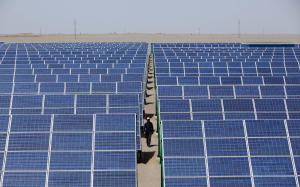
Despite the hurdles, Indonesia's renewable energy potential remains vast. Yet, much of the planned new capacity is concentrated on the Java-Madura-Bali grid, neglecting rural areas across Sumatra, Kalimantan, Sulawesi, and Papua, which have access to abundant clean energy resources. Indonesia’s solar potential alone includes 290 ground-mounted solar projects with a total capacity of 166 GW, many of which are considered highly economically viable.
To align with the country’s climate goals, CREA recommends that Indonesia realign its energy plans to meet the JETP’s 2030 targets and 1.5-degree scenario pathway. The report also stresses the need for a national commitment to accelerating solar, wind, and dispatchable renewable energy development, and calls for a halt to new fossil fuel-based power additions unless essential for grid stability.
Earlier this year, President Prabowo outlined a visionary plan to build 100 GW of solar power by 2035, along with 80 GW of decentralized solar systems with battery storage across 80,000 villages. However, experts argue that this ambition needs to be integrated into key national energy documents like RUPTL and the National Electricity Plan (RUKN) to ensure coordinated and sustainable development.
To achieve President Prabowo's clean energy vision, the government must take decisive action to overhaul national energy planning, ensuring that the grid infrastructure is designed to accommodate the anticipated renewable energy surge. International cooperation, particularly through initiatives like JETP, will also play a pivotal role in unlocking Indonesia’s renewable energy potential and realizing a future free from fossil fuel dependence.
“The government must act swiftly to implement its ambitious renewable energy goals and collaborate closely with international partners to accelerate the energy transition,” Katherine said.
Already have an account? Sign In
-
Start reading
Freemium
-
Monthly Subscription
20% OFF$29.75
$37.19/MonthCancel anytime
This offer is open to all new subscribers!
Subscribe now -
Yearly Subscription
33% OFF$228.13
$340.5/YearCancel anytime
This offer is open to all new subscribers!
Subscribe now
Set up email notifications for these topics