


Indonesia is accelerating its energy transition with new regulations to boost solar power deployment, expand rural electricity access, and reduce carbon emissions, said Eniya Listiani Dewi, Director General of New, Renewable Energy and Energy Conservation (EBTKE) at the Ministry of Energy and Mineral Resources (ESDM).
“The Ministry is fully committed to achieving universal electricity access and fostering massive adoption of renewable energy technologies, especially solar,” Eniya said while addressing Mentari Day in Jakarta on Thursday, July 3, 2025.
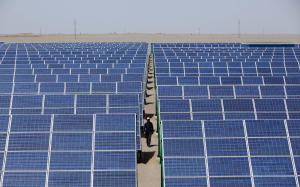
“Our new rooftop solar quota for 2025 has just launched on July 1st, and public enthusiasm is overwhelming,” she added.
She noted that ESDM ministry is reviewing whether the 2025 rooftop solar quota can be increased due to high demand, signaling a shift in both policy and market readiness.
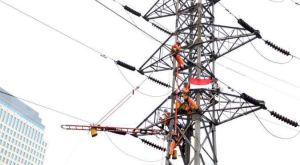
“This is part of our broader ambition to reach 100 percent electricity access across Indonesia, which President Prabowo Subianto has emphasized as a top priority for the cabinet,” she said.
Eniya highlighted that recent reforms under Ministerial Regulation No. 11 have significantly opened the door for both domestic and foreign investment by clarifying local content (TKDN) rules for renewable energy projects.
“We no longer define local contribution narrowly. Now, we include engineering, construction, and services − not just physical components,” she said. “This has removed investment bottlenecks.”
Further deregulatory efforts are underway, especially targeting the solar sector. “We’re working closely with the Mentari team to simplify solar licensing and accelerate deployment of rooftop, ground-mounted, and floating solar power systems,” Eniya said.
She stressed that these steps are designed to support Indonesia’s goal of energy self-sufficiency and improve the business environment for green investors.
“It’s not just about clean energy access. It’s also about building a robust ecosystem for investment and industrial growth,” she cited.
Energy transition pathways
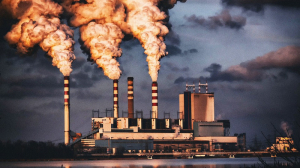
In her remarks, Eniya acknowledged the complexity of Indonesia’s energy transition, noting that there is “no single solution.” The government, she said, is implementing a multi-pathway approach including co-firing biomass in coal plants, repurposing fossil fuel assets, and early retirement of coal-fired power plants as outlined in Ministerial Regulation No. 10.
The country’s long-term energy plans, she said, also account for emerging technologies such as hydrogen, ammonia, and even nuclear. These have already been incorporated into the new National Electricity General Plan (RUKN) and the upcoming RUPTL (Electricity Procurement Plan).
“Hydrogen, biofuels, and nuclear will all play a role,” she said, emphasizing the importance of innovation and adaptation. “We are working with various ministries to ensure that rural areas are not left behind. Villages must not only be electrified but also empowered to produce their own energy.”
Energy efficiency
One of the most overlooked but powerful tools in the energy transition, according to Eniya, is energy efficiency. Referring to Ministerial Regulations No. 8 and No. 3, she said that smart efficiency measures can reduce emissions by up to 37 percent without the need for massive investment.
“It’s often forgotten: by simply saving energy, we can cut emissions dramatically,” she said. “While renewables reduce emissions by 52percent, efficiency alone can achieve 37 percent − and it costs far less.”
Eniya emphasized that efficiency must be viewed not only as a climate solution but as an economic strategy. “Electricity should be used where it has the highest multiplier effect − like industry. Efficiency frees up capacity for productive use,” she added.
Mentari Program
Reflecting on the Mentari Program’s contributions over the past five years, Eniya praised the UK-Indonesia partnership, saying it had catalyzed key reforms, demonstration projects, and capacity-building programs that have shaped Indonesia’s clean energy landscape.
“The UK’s support, through UK PACT and Mentari, has been instrumental in accelerating our clean energy goals,” she said. “From rooftop solar to off-grid access and regulatory design, we’ve made tangible progress.”
Looking ahead, she expressed hope that the next phase of Mentari will be even more impactful. “We’re already seeing the benefits of this collaboration. Let’s build on it with concrete, mutually beneficial projects,” she said.
The event also celebrated Indonesia’s young clean energy innovators, with awards given to students whose essays addressed net-zero pathways. Eniya joined senior officials and UK representatives in honoring the winners, praising their creativity and contribution to the national discourse on climate and energy.
In closing, Eniya reaffirmed the government’s determination to deliver a clean, equitable, and resilient energy system. “This is not just policy − it’s a movement. And I believe Indonesia is ready to lead,” she concluded.
Already have an account? Sign In
-
Start reading
Freemium
-
Monthly Subscription
20% OFF$29.75
$37.19/MonthCancel anytime
This offer is open to all new subscribers!
Subscribe now -
Yearly Subscription
33% OFF$228.13
$340.5/YearCancel anytime
This offer is open to all new subscribers!
Subscribe now
Set up email notifications for these topics