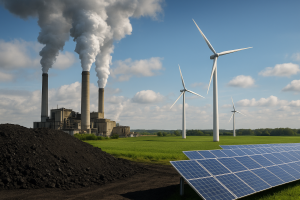



Indonesia’s newly released electricity supply roadmap (RUPTL) 2025–2034, outlines a stark pivot back to fossil fuel reliance, undermining previous clean energy goals and raising concerns among environmental analysts and energy transition advocates.
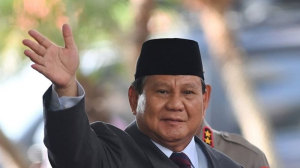
A briefing by the Center for Research on Energy and Clean Air (CREA) warns that the new plan marks a significant departure from Indonesia’s energy transition trajectory as outlined in the Just Energy Transition Partnership (JETP) agreement and President Prabowo Subianto’s stated goal of achieving a fossil-free power system by 2040.
“The 2025–2034 RUPTL is a missed opportunity to lead Indonesia toward a resilient and clean energy future,” Katherine Hasan, Analyst at CREA, told a press conference on Thursday, June 12, 2025.
“Instead of accelerating renewables, PLN’s new plan frontloads fossil fuel development and pushes meaningful renewable expansion to the next decade — when action is urgently needed now.” she added.
The plan, published by state utility Perusahaan Listrik Negara (PLN), projects 16.6 gigawatts (GW) in additional coal and gas power capacity while downgrading renewable energy targets through 2030.
According to CREA’s analysis, fossil fuel power generation is expected to increase by 40 percent by 2034, rising from 286 TWh in 2024 to over 400 TWh. Coal will continue to dominate electricity generation, with no phase-out plan in sight. Notably, half of the 6.35 GW of new coal power capacity is slated to come online in 2025, including major projects like Jawa-9 and Jawa-10 in the Java-Bali grid.
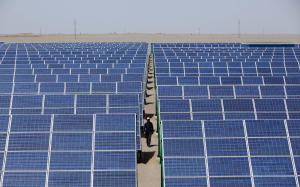
Meanwhile, renewable energy targets have been scaled down. The new RUPTL envisions 17 GW of renewable capacity additions by 2030, down from 20.9 GW in the previous plan. This includes only 10.6 GW from solar and wind − just 40 percent of the 24.3 GW target laid out in the JETP’s Comprehensive Investment and Policy Plan.
“The reduced targets, particularly for solar and wind, run directly counter to what Indonesia needs to deliver on its climate goals,” Katherine said. “The government is not only lowering the bar − it’s risking investor confidence and delaying job-creating renewable projects that could boost local economies.”
The RUPTL also includes 10.3 GW of new gas-fired power plants − more than double the JETP’s projections. Analysts flagged this expansion as economically questionable and potentially unsustainable, especially given Indonesia’s declining domestic gas production and costly infrastructure demands.
“The gas buildout raises red flags,” Katherine cited. “It puts enormous pressure on PLN’s already fragile financial position, which in 2024 relied on over Rp 177 trillion (US$11 billion) in fossil fuel subsidies − nearly a third of its total revenue. Without reforms, the utility risks locking the country into expensive, polluting energy systems.”
Another contentious element is the plan’s heavy emphasis on energy storage − 10.3 GW from pumped hydro and batteries − which far exceeds international norms based on current renewable capacity. CREA argues this points to PLN’s reluctance to optimize grid operations for flexible renewable integration, instead creating a perceived need for costly storage infrastructure.
Experts warn that this fossil-heavy orientation in the critical decade to 2034 jeopardizes Indonesia’s ability to meet its net-zero emissions commitment by 2060 or earlier. CREA’s modeling shows that continuing down this path could result in 303,000 premature deaths and US$210 billion in health-related costs from air pollution due to coal power, while a faster coal phase-out could prevent up to 182,000 deaths and save US$130 billion.
“We ask the government and PLN to realign the RUPTL with national and international climate commitments. That means fast-tracking renewables in the next five years, creating a binding coal retirement pathway, and holding PLN accountable to deliver the clean energy transition Indonesia urgently needs,” she said.
Already have an account? Sign In
-
Start reading
Freemium
-
Monthly Subscription
20% OFF$29.75
$37.19/MonthCancel anytime
This offer is open to all new subscribers!
Subscribe now -
Yearly Subscription
33% OFF$228.13
$340.5/YearCancel anytime
This offer is open to all new subscribers!
Subscribe now
Set up email notifications for these topics