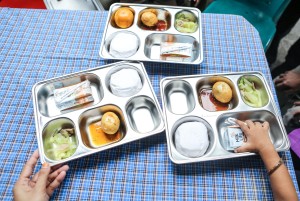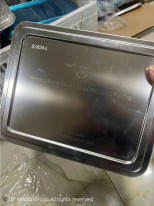



The National Nutrition Agency (BGN) defended its decision to import food trays for the government’s free nutritious meal (MBG) program, saying domestic producers are unable to meet the demand of up to 80–89 million trays by the end of this year.
BGN chief Dadan Hindayana said that while local manufacturers can produce around 10–11.6 million trays per month, the agency requires at least 80 million trays over the next four months to support the implementation of the MBG program.
“Domestic production can only reach about 40 million trays in four months. To fill the gap, the Ministry of Trade, after coordinating with us, has decided to open imports so that the program can run smoothly,” Dadan told lawmakers on Monday, September 8, 2025.
He emphasized that BGN encourages partners and contractors to prioritize domestic products. “For procurement using the state budget, we have directed purchases toward local production. Imports are only used to ensure continuity of the program when local capacity is insufficient,” he said.
Dadan also noted that issues of safety, hygiene, and halal certification will be handled by relevant authorities such as the Food and Drug Monitoring Agency (BPOM) and the Halal Certification Agency.
However, members of health and manpower Commission IX of the House of Representatives (DPR) raised concerns that the imports could undermine local industry.
Legislator Irma Suryani Chaniago criticized the reliance on imported trays, many of which come from China, arguing that local producers have the capability to supply the required products.
“Stop importing food trays from China. Domestic producers are still capable of meeting the standards needed by MBG. I’ve spoken to entrepreneurs who say their production is piling up because imports are prioritized. This destroys local industry and risks food safety, including trays that were even reported to contain pork-based materials,” Irma said.
She urged BGN to stay focused on implementing the MBG program responsibly instead of expanding into areas outside its mandate.
“Don’t get involved in matters like cooperatives or other programs that are not your responsibility. Focus on ensuring MBG is accountable and safe, so children don’t suffer from contaminated or substandard food,” she added.
Dadan acknowledged the criticism and reiterated that BGN had already consolidated with 17 domestic producers. “We continue to work with local companies and encourage them to increase their production capacity. But realistically, imports are still needed to reach our program target within the year,” he said.
The MBG program, one of President Prabowo Subianto’s flagship initiatives, is designed to provide nutritious meals for schoolchildren and vulnerable groups nationwide.
Already have an account? Sign In
-
Start reading
Freemium
-
Monthly Subscription
20% OFF$29.75
$37.19/MonthCancel anytime
This offer is open to all new subscribers!
Subscribe now -
Yearly Subscription
33% OFF$228.13
$340.5/YearCancel anytime
This offer is open to all new subscribers!
Subscribe now
Set up email notifications for these topics