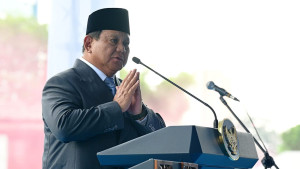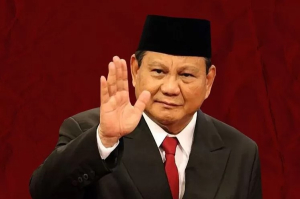



The government and the Indonesian Central Bank (BI) have agreed on a new burden-sharing mechanism to support priority programs under President Prabowo Subianto’s Asta Cita agenda, in particular the Public Housing Program and the Red-and-White Village Cooperatives initiative.
Coordinating Minister for the Economy, Airlangga Hartarto, cited that the scheme would not involve the issuance of new government bonds (SBN), but rather a cost-sharing arrangement on interest rates.
“This is not about issuance, but about sharing the interest burden,” Airlangga said at the Coordinating Ministry for the Economy on Monday, September 8, 2025.
Under the policy, BI will purchase government securities in the secondary market, while the Ministry of Finance allocates the proceeds to fund the two programs.
BI Governor Perry Warjiyo earlier said that both the government and BI had agreed to evenly share the interest costs: 2.9 percent for the housing program and 2.15 percent for the Red-and-White Village Cooperatives.
As of the end of August 2025, BI had purchased government bonds worth around Rp200 trillion (US$12.1 billion), part of which will be allocated to these priority programs. However, the government has not yet disclosed the total amount to be funded under this scheme.
Money printing
BI’s Head of Communications, Ramdan Denny Prakoso, stressed that the program does not involve printing new money.
“There is no money printing,” he said as quoted by Katadata.co.id on September 4, 2025.
He cited that the shared interest costs would be calculated after deducting income from government funds placed in domestic financial institutions.
The agreement has been formalized in a Joint Decree on additional interest support for government programs under Asta Cita. It will remain in effect from 2025 until the programs are completed.
Central Bank independence
Despite the assurances, economists have raised concerns. Nailul Huda, Director at the Center of Economic and Law Studies (Celios), argued that the scheme risks undermining BI’s independence.
“This erodes Bank Indonesia’s independence as a central bank, which should safeguard monetary policy,” Huda told Katadata.co.id.
He warned that the arrangement reduces the government’s responsibility for fiscal discipline and could place an additional burden on BI. According to Huda, burden-sharing may only be justified in times of crisis, such as during the COVID-19 pandemic when direct aid to households was urgently needed.
“The economy is still moving across many sectors. Fiscal stimulus should come from government policy, not by asking BI to share the debt,” he said.
Market view
In contrast, Myrdal Gunarto, economist at Maybank Indonesia, viewed the policy as reasonable provided it is implemented cautiously.
“It depends on BI’s liquidity position. If BI’s liquidity is abundant, there should be no issue,” he said.
Myrdal added that while BI would absorb government bonds at lower yields, it could still benefit financially.
“But if funding needs become too large, BI must proceed carefully and reassess its balance sheet position,” he cautioned.
Already have an account? Sign In
-
Start reading
Freemium
-
Monthly Subscription
20% OFF$29.75
$37.19/MonthCancel anytime
This offer is open to all new subscribers!
Subscribe now -
Yearly Subscription
33% OFF$228.13
$340.5/YearCancel anytime
This offer is open to all new subscribers!
Subscribe now
Set up email notifications for these topics