


The government will provide incentives to boost the development of Nickel Manganese Cobalt (NMC) batteries, aimed at making their prices competitive with the currently much cheaper Lithium Ferro Phosphate (LFP) batteries.
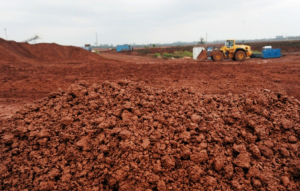
Deputy for Basic Infrastructure Coordination at the Coordinating Ministry for Infrastructure and Regional Development, Muhammad Rachmat Kaimuddin, said the move is in line with Indonesia’s position as one of the world’s largest nickel producers.
“We want the price of NMC and LFP to be the same, so the market can decide the preference,” Rachmat said in Jakarta, on Wednesday, August 13, 2025
Technically, NMC batteries have higher energy density but are more costly to produce, while LFP batteries are cheaper and more durable, albeit with lower energy density.
Deputy for Investment Promotion at the Ministry of Investment and Downstreaming, Nurul Ichwan, noted that the incentive policy aligns with the government’s investment promotion plan for the nickel battery industry. He said the formative phase of the EV market will end this year, coinciding with the planned halt imports of fully built-up (CBU) electric vehicle (EV) in December 2025.
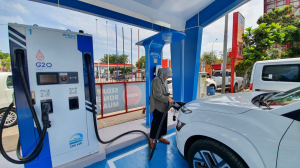
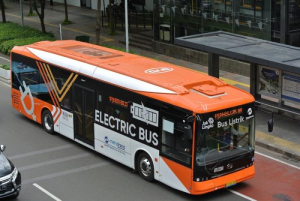
Currently, most EVs in Indonesia use LFP batteries because they are more affordable, while NMC batteries are common in premium models due to their higher energy density. Nurul expects demand for high-end EVs to grow as the domestic market matures.
“If NMC EVs enter during the early market formation stage, the risk is high. But once segmentation is established, demand for premium EVs will emerge naturally,” he cited.
The government plans to focus on attracting NMC battery investors early next year while encouraging EV manufacturers to build local production facilities. This strategy is intended to provide market certainty for NMC investors, with much of the output destined for export.
“We will stimulate interest in NMC battery investment through fiscal incentives from the Ministry of Finance, along with other non-fiscal incentives,” Nurul said.
However, Rachmat stressed that the government will continue to develop LFP batteries alongside NMC, as both enjoy strong demand in the global market. He pointed out that most domestically produced EV batteries will be exported, given Indonesia’s relatively small automotive production capacity.
“Last year, national car production was around 1.4 million units, or just 2 percent of the global output of 80 million units per year. So, much of the nickel we process into EV batteries will be exported,” he said.
Rachmat added that technological competition between NMC and LFP batteries remains ongoing, and the government intends to process both types domestically.
Already have an account? Sign In
-
Start reading
Freemium
-
Monthly Subscription
20% OFF$29.75
$37.19/MonthCancel anytime
This offer is open to all new subscribers!
Subscribe now -
Yearly Subscription
33% OFF$228.13
$340.5/YearCancel anytime
This offer is open to all new subscribers!
Subscribe now
Set up email notifications for these topics