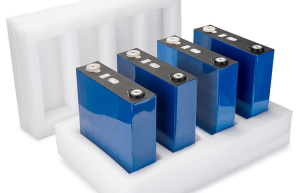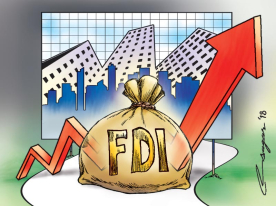



The Investment Coordinating Board (BKPM) has reported a sharp rise in foreign investor interest in building public electric vehicle charging stations (SPKLU) following the government’s recent regulatory overhaul.
The change came with Government Regulation (PP) No. 28/2025, which lowers the minimum foreign investment requirement to Rp10 billion (US$621,000) per province. Under the previous regulation, PP No. 5/2021, the threshold was set at Rp10 billion per single location − an amount investors considered burdensome, resulting in sluggish interest.
BKPM Deputy for Investment Promotion, Nurul Ichwan, said the revised policy has attracted investors from both China and Europe.
“After PP No. 28/2025 was issued, many foreign investors expressed interest in building SPKLU here. Some even plan to build stations that the government views as economically unfeasible,” Nurul said in Jakarta on Wednesday, August 13, 2025.
He noted that opportunities for SPKLU investment remain vast, as Indonesia’s electric vehicle (EV) industry is still in its early stages, and charging infrastructure remains limited.
All foreign investors are required to partner with a domestic cooperative to ensure that investment not only supports EV development, but also drives national economic growth and reduces carbon emissions.
Nurul cited that the revision addressed a mismatch between the government’s vision and the industry’s realities. The 2021 regulation prioritized local investors, yet SPKLU technology is still dominated by foreign companies, with no domestic manufacturers capable of producing it.
The new regulation has also drawn interest from investors developing ultra-fast motorcycle charging stations. These facilities would use technology capable of charging from 0 percent to 80 percent in just 15 minutes.
“Previously, there was a paradox. Local investors were given priority, but there was no domestic SPKLU technology. Foreign investors had the technology, but the investment requirements made projects uneconomical,” he said.
Despite the growing interest, Nurul acknowledged challenges remain − particularly in standardizing SPKLU equipment. Currently, each EV manufacturer uses different charging plug designs.
Deputy for Basic Infrastructure Coordination at the Coordinating Ministry for Infrastructure and Regional Development, Muhammad Rachmat Kaimuddin, said the government will soon set a national SPKLU standard in collaboration with stakeholders.
“The number of SPKLU plug designs must be limited so consumers won’t be confused when choosing,” he said.
Meanwhile, Vietnamese EV manufacturer VinFast has also pledged to contribute to Indonesia’s EV ecosystem. Through its subsidiary V-Green, the company plans to build 63,000 SPKLU units nationwide.
“One of our expansion strategies is to develop the EV ecosystem across Indonesia,” Kariyanto Hardjosoemarto, CEO of VinFast Indonesia, said.
Already have an account? Sign In
-
Start reading
Freemium
-
Monthly Subscription
20% OFF$29.75
$37.19/MonthCancel anytime
This offer is open to all new subscribers!
Subscribe now -
Yearly Subscription
33% OFF$228.13
$340.5/YearCancel anytime
This offer is open to all new subscribers!
Subscribe now
Set up email notifications for these topics