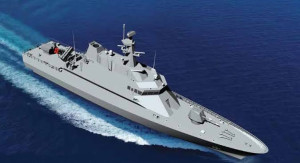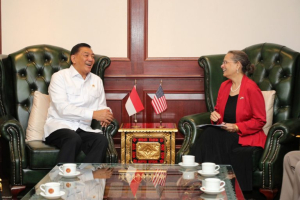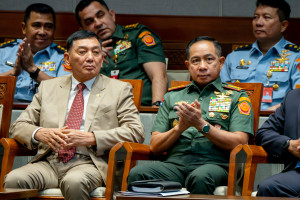



The Ministry of Defense has signed a landmark deal with Türkiye for the procurement of two MILGEM Istif-class stealth frigates, a move that marks Türkiye’s first export of next-generation warships and significantly deepens bilateral defense ties.
The agreement valued at nearly US$1 billion was signed during the International Defense Industry Fair (IDEF), on Saturday, July 26, 2025, in Istanbul between the Indonesian Ministry of Defense and Turkish naval consortium TAIS Shipyards, in the presence of President of the Defence Industry Agency of Türkiye (SSB) Haluk Görgün.
“This marks Türkiye’s first export of MİLGEM-class vessels to Indonesia and represents a significant milestone in strategic naval cooperation, bringing pride to our nations,” the SSB said in a statement.
“We hope this collaboration, embodying the shared maritime defense vision of two allied nations, will be beneficial for all parties involved.”
High-stake partnership
The timing of the deal is notable. With maritime tensions rising in the South China Sea and increased regional focus on naval deterrence, Indonesia’s acquisition of the Istanbul-class frigates underscores its intent to bolster blue-water capabilities and assert maritime sovereignty across its vast archipelagic territory of over 17,000 islands.
Indonesia’s adoption of the Istif-class signals a notable shift in its procurement strategy, traditionally reliant on suppliers from Europe, Russia, or South Korea. Analysts view the selection as a nod to Türkiye’s growing credibility in the global defense sector bolstered by recent successes in exporting Bayraktar drones and T129 ATAK helicopters.
Crucially, the deal is reported to include technology transfer (ToT) and local production components, aligning with Jakarta’s emphasis on building domestic defense industry capacity through offset programs.
Over 220 Turkish companies and 80 subcontractors are involved in the MILGEM program, providing Indonesia with access to an expansive ecosystem for ongoing support, co-development, and potential regional export partnerships.
Sources familiar with the talks suggest that this is only the beginning. Additional negotiations are underway involving drones, naval radars, and joint development projects, reflecting a growing strategic alignment between Ankara and Jakarta.
The Indonesian defense ministry reiterated its push for mutually beneficial and sustainable partnerships aimed at strengthening national resilience and reducing dependency on foreign suppliers.
The acquisition could reshape regional naval dynamics. Other ASEAN navies, facing their own procurement challenges and rising pressure from China’s grey-zone tactics, may now look to Ankara for viable alternatives to Western offerings.
For Türkiye, the success of this deal enhances its positioning as a global defense exporter, capable of delivering complex systems at competitive costs with strategic industrial cooperation.
Unproven
Indonesia is also increasingly cautious in accepting offers of various weapons systems from Turkiye, especially considering that many of these systems have not been proven in real military operations. In recent years, Turkiye has been aggressively offering various types of weapons to Indonesia, with Indonesia often positioned as the "first export customer" or first buyer for Turkish defense equipment exports.
Since 2010, Indonesia's experience as the first buyer of weapons exports from several other countries has often been marked by obstacles. By being the first buyer, Indonesia often functions as a "field laboratory," namely a place for direct testing in real fields. This often makes Indonesia have to face technical and operational problems that arise due to products that are not yet fully mature.
"Being the first export customer does have its own risks. We must ensure that the defense equipment purchased has been tested well in field situations so that there are no technical obstacles that could endanger personnel and operations," Defense Analyst at PT Semar Sentinel, Alman Helvas Ali, spoke to Indonesia Business Post in November 2024.
This negative experience as the first buyer has influenced Indonesia's defense policy which is increasingly selective towards unproven products. Many parties suggest that Indonesia pay attention to aspects of trials and product track records on the battlefield before deciding on a purchase, in order to ensure the quality and reliability of the weapons system.
With this experience, Indonesia is now more selective in choosing defense equipment, demanding weapons systems that have clear track record in the field. This effort aims to reduce dependence on products that have not been fully tested, while maintaining national defense quality standards.
Already have an account? Sign In
-
Start reading
Freemium
-
Monthly Subscription
20% OFF$29.75
$37.19/MonthCancel anytime
This offer is open to all new subscribers!
Subscribe now -
Yearly Subscription
33% OFF$228.13
$340.5/YearCancel anytime
This offer is open to all new subscribers!
Subscribe now
Set up email notifications for these topics