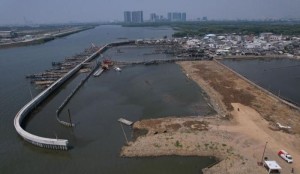



Indonesia is set to transform Rote Ndao in East Nusa Tenggara into a key hub for salt production with the development of the 10,000-hectare (ha) National Salt Industry Zone (K-SIGN) aimed at supporting the country’s salt self-sufficiency program and aligning with the government’s plan to halt industrial salt imports by 2028.
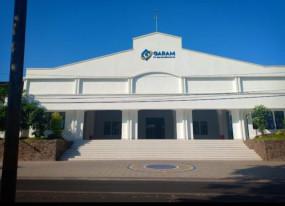
PT Garam, the state-owned salt producer, has been appointed by the Ministry of Marine Affairs and Fisheries to operate a government-funded processing plant within the zone, with an annual capacity of 220,000 tons. Abraham Mose, President Director of PT Garam, revealed that three to four investors have already expressed interest in establishing factories in the zone.
"Foreign investors have also reached out to me. The upcoming ban on salt imports has sparked high investor interest in domestic salt production facilities," Mose told a press conference at the Ministry of Marine Affairs and Fisheries on Wednesday, June 11, 2025.
The push to attract salt-using and processing industries to K-SIGN is crucial, Mose noted, because most such industries are currently based on Java Island. High national logistics costs make domestically produced salt less competitive, especially when transported from eastern Indonesia.
According to the Ministry of Transportation, logistics costs accounted for 14.29 percent of Indonesia’s GDP last year, in stark contrast to Singapore, where the figure is only 8 percent. To address this, PT Garam plans to begin operations at the new Rp750 billion (US$46 million) factory by the end of this year. The plant will use Mechanical Vapor Recompression (MVR) technology to boost efficiency by speeding up the salt evaporation process. The company expects a 30 percent increase in production capacity next year.
Director General of Marine Affairs Management at the Ministry of Marine Affairs and Fisheries, A. Koswara, emphasized that the salt price from K-SIGN will be on par with imported salt. High production efficiency is expected to offset inter-island logistics costs. Koswara explained that the K-SIGN facilities will handle the full salt-processing chain − from drying to purification − raising the overall value and quality of the salt.
“Previously, salt from East Nusa Tenggara was low in quality, making it uncompetitive upon arrival in Java. This initiative changes that,” Koswara said.
The government is building one of 10 planned industrial zones within K-SIGN, complete with supporting infrastructure like roads, water supply, and electricity. The goal is to eventually produce up to 3 million tons of salt annually, replacing Indonesia’s current import volume of 2.6 million tons.
The first government-built zone is scheduled to be operational by the end of this year, while the remaining nine will be offered to investors and are expected to be fully operational by 2027. Between 2025 and 2027, K-SIGN is projected to reduce industrial salt imports by around 600,000 tons annually. Imports are expected to fall from 2.6 million tons in 2024 to 1.8 million tons in 2025, and cease entirely by 2028.
Once fully operational, K-SIGN is expected to generate employment for approximately 26,000 people, although the number of jobs to be created by the end of this year has not been disclosed.
Tag
Already have an account? Sign In
-
Start reading
Freemium
-
Monthly Subscription
20% OFF$29.75
$37.19/MonthCancel anytime
This offer is open to all new subscribers!
Subscribe now -
Yearly Subscription
33% OFF$228.13
$340.5/YearCancel anytime
This offer is open to all new subscribers!
Subscribe now
Set up email notifications for these topics