

Editorial and Perspective
Bold opinions and cutting-edge perspectives from thought leaders on the burning issues of our time.
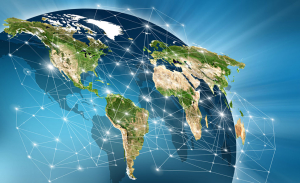
Global power, multipolarity and the new administration
Global PowerGlobal Power is a nation's or entity's ability to influence or control events worldwide. This power can be political, economic, military, or cultural. It is dynamic, changing with geopolitical shifts, economic trends, technological advancements, and cultural developments. Countries aim to boost their global power to gain more influence and security internationally.There are eight key parameters of global power: economic strength, military capability, technological innovation, political influence, energy resources, cultural influence, regional dominance and policy alignment. Based on these parameters, the top seven states currently considered as global powers are the United States, China, the European Union (EU), Russia, India, Japan, and Germany.Large multinational corporations can also wield significant global influence, though they are not traditionally categorized as global powers in the same way countries are. Corporations with significant global influence among other things are Apple inc., Amazon, Microsoft, Alphabet Inc. (Google), Saudi Aramco, Samsung and Tesla, Inc.Various institutions, research centers, and organizations regularly publish rankings of countries across different dimensions of power. For example, the Global Firepower Index, released annually by Global Firepower, assesses military strength based on factors like manpower, equipment, and defense budget. In terms of economic strength, the Economist Intelligence Unit publishes the annual Global Economic Prospects report, analyzing economic trends, growth prospects, and risks worldwide. Lastly, the United Nations Development Programme (UNDP) compiles the Human Development Index (HDI), which measures well-being based on health, education, and standard of living.
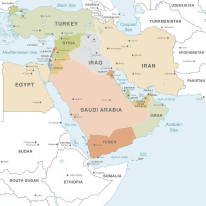
Israel-Iran conflict costs U.S. credibility, impacts Indonesia
By: Beni Sukadis, Military analyst at the Indonesian Institute of Defense and Strategic Studies (LESPERSSI) based in Jakarta
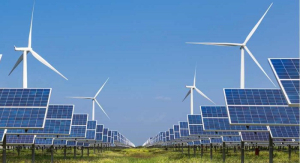
Market liberalization and energy security: Promises not always kept
By Nikolaus Loy, a lecturer on international relations at the UPN Veteran University. Yogyakarta
Rice politics: From New Order to Reformasi
By Nikolaus Loy, a lecturer on international relations at the UPN Veteran, Yogyakarta
The New President and the Challenge of Deindustrialization
By Nikolaus Loy, a lecturer on international relations at the UPN Veteran University. Yogyakarta
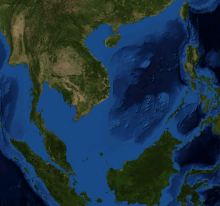
Indonesia can no longer be pacifist on the South China Sea issue
By Nikolaus Loy, a lecturer on international relations at the UPN Veteran University. Yogyakarta
What if China, Russia take profit from oil trading?
Chinese President Xi Jinping visited Central Asia in a post-COVID-19-pandemic series of meetings of the Shanghai Cooperation Organization (SCO) in Samarkand, Uzbekistan, on September 15 and 16, 2022. Xi's choice to make his first visit to the SCO showed the importance of the event.
What if Elon Musk controls cyber, space?
Conventional discourse defines geopolitics as the projection and implementation of bargaining positions in international relations in terms of the geographical position of a country or region relative to other countries and regions (Ratzel, 1897; Kjellen 1917). It is in that context that the concept and doctrine of military superiority as a symbol of land control (Mackinder, 1904; Haushoffer (1941), sea (Mahan, 1890), and air (Doughet, Francis, 2020) gets its accentuation.