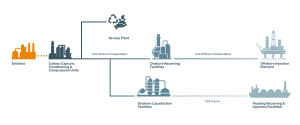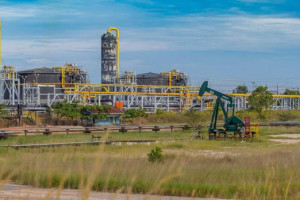


The Indonesian government is inviting global investors to accelerate collaboration on carbon capture and storage (CCS) and carbon capture, utilization, and storage (CCUS) projects in its upstream oil and gas sector, reinforcing ASEAN’s collective push toward a low-carbon energy future.
The initiative was presented by the Upstream Oil and Gas Regulatory Task Force (SKK Migas) during the Abu Dhabi International Petroleum Exhibition and Conference (ADIPEC) 2025, one of the world’s largest energy forums held in the United Arab Emirates.
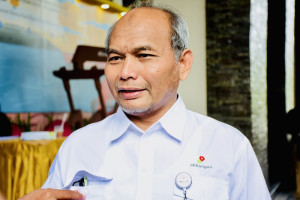
“The development of CCS and CCUS projects is part of Indonesia’s long-term commitment to sustainability in the energy sector, while underscoring ASEAN’s growing role in the global energy transition,” Head of SKK Migas, Djoko Siswanto, said during the conference.
National priority projects
Indonesia’s commitment is reflected in the inclusion of CCS/CCUS projects in its National Strategic Projects (PSN) portfolio.
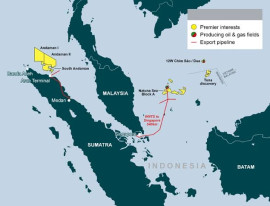
Among them is bp Tangguh UCC, slated to begin operations in the third quarter of 2028, with a carbon storage capacity of up to 1.8 gigatons of CO₂ and a peak gas production of 476 million standard cubic feet per day (MMSCFD). The project is expected to yield 56 LNG cargoes annually and produce 4,700 barrels of condensate per day.
At present, Indonesia is developing 19 CCS/CCUS projects across multiple oil and gas working areas, most of which are projected to become operational within the next five years. One key initiative is in Aceh, where the Aceh Oil and Gas Management Agency (BPMA) is preparing to establish an open CCS/CCUS hub to serve both domestic and international operators.
“Beyond emission reduction, the Aceh CCS/CCUS initiative represents a broader opportunity for technology transfer, geological research, and the creation of a carbon management ecosystem that benefits local communities,” G&G Technical Lead at BPMA, Brianto Adhie Wardhana, said during his presentation at the Indonesia Pavilion.
Showcasing partnerships
During its four-day participation at ADIPEC, Indonesia’s pavilion carried the theme “Potentials to Discover, Partners to Deliver”, highlighting the country’s competitiveness, growing regulatory readiness, and diverse opportunities for collaboration across oil and gas, low-carbon energy, and technology development.
The exhibition provided a platform for SKK Migas, the Ministry of Energy and Mineral Resources (ESDM), BPMA, and Pertamina Group to engage directly with international stakeholders interested in Indonesia’s upstream and decarbonization sectors.
“Now is the right time for global partners to work with Indonesia. We are ready with strong resources, clear regulations, and a shared vision for energy independence,” Djoko cited.
Indonesia’s regulatory progress has been widely recognized at the regional level. According to the ASEAN Centre for Energy (ACE), Indonesia has established the most comprehensive CCS/CCUS legal framework in Southeast Asia as of 2024.
Key regulatory milestones include: Presidential Regulation No. 14/2024, which enables carbon monetization and provides fiscal incentives; Energy and Mineral Resources (ESDM) Minister Regulation No. 20/2023, classifying CCS/CCUS as an operational cost in oil and gas production; and ESDM Minister Regulation No. 16/2024, defining legal zones for carbon storage activities.
Already have an account? Sign In
-
Start reading
Freemium
-
Monthly Subscription
20% OFF$29.75
$37.19/MonthCancel anytime
This offer is open to all new subscribers!
Subscribe now -
Yearly Subscription
33% OFF$228.13
$340.5/YearCancel anytime
This offer is open to all new subscribers!
Subscribe now
Set up email notifications for these topics