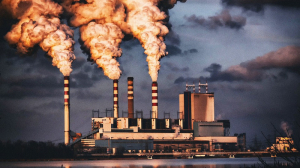



The government must change its mindset regarding the early retirement of coal-fired power plants (PLTU), which is often viewed as a costly burden, said Atina Rizqiana, a researcher at the Center of Economic and Law Studies (CELIOS).
She emphasized that early coal plant retirement should be seen as a long-term investment that will bring future economic and environmental benefits to Indonesia.
“The main issue is not the lack of funding, but the mindset that considers this a loss rather than a long-term investment,” Atina, commonly known as Kiki, said during the launch of the report “Toxic Twenty” in Jakarta, Tuesday, November 4, 2025.
According to Kiki, the economic losses caused by coal plants far exceed the costs of retiring them early.
“There’s an estimated decline in economic output worth Rp52.44 trillion (US$31.1 billion), and potential income losses of Rp48.47 trillion, particularly in regions with a high concentration of coal plants,” she said, citing the report.
The figures come from the “Toxic Twenty: The Blacklist of the 20 Most Dangerous Coal-Fired Power Plants in Indonesia”, a report compiled by CREA, CELIOS, and Trend Asia. The plants listed are Suralaya, Paiton, Cirebon, Tanjung Jati B, Cilacap, Bukit Asam, Pacitan, Pelabuhan Ratu, Adipala, and Indramayu, as well as Labuan, Central Java, Ombilin, Jawa-7, Celukan Bawang, Pangkalan Susu, Tanjung Awar-Awar, Rembang, Banten, and Labuhan Angin.
The decline in output refers to reduced productivity across sectors caused by air pollution and poor worker health, while income loss stems from deteriorating air, water, and soil quality. The agriculture, forestry, fishery, manufacturing, and trade sectors are among the hardest hit.
“Coal plants have reshaped rural landscapes. Fishermen are forced to sail farther, environmental degradation affects farming and forestry yields, and the impact snowballs across communities,” Kiki said.
A joint study by CELIOS, CREA, IESR, and the Ministry of Energy and Mineral Resources (ESDM) estimates that retiring coal plants by 2050 would cost US$27.5 billion (Rp459.3 trillion). However, the annual economic losses caused by coal plant operations reach US$ 52.4 billion (Rp875.3 trillion), with health-related costs at US$7.4 billion (Rp123.6 trillion). The analysis suggests Indonesia could save up to US$130 billion (Rp2,171 trillion) if coal plants were phased out.
Earlier, ESDM Minister Bahlil Lahadalia said Indonesia could retire coal plants sooner if it secured adequate and low-interest financing.
“If we had funding today, we could retire coal plants tomorrow. But where’s the money? Will global banks finance Indonesia with low interest? Give us cheap loans, and I’ll retire them,” Bahlil said in May 2025.
He acknowledged that the main obstacle remains funding, noting that the government will not force the program if it burdens the state budget or the public.
“Early retirement technology is expensive. Forcing it would be unrealistic,” he added.
So far, the government has only planned to retire one plant, Cirebon-1, as part of the initial stage.
Cost of coal pollution
The human cost of coal power is being felt across Indonesia. Dedy Susanto, a fisherman from Pangkalan Susu, North Sumatra, was forced to become a construction worker after losing his main source of income.
“I used to earn around Rp500,000 per day, enough to support three families. Now, I can’t even support one,” he said in Jakarta on Tuesday, November 4, 2025.
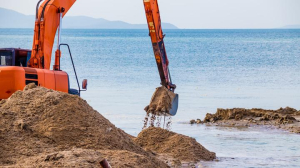
Dedy’s daily earnings dropped to Rp50,000 after his catch plummeted due to pollution and coal waste dumped into the sea. “The seawater is filled with hot waste and coal particles,” he said.
In Indramayu, West Java, farmers are also struggling. Ahmad Yani, a resident of Mekarsari Village, said the co-firing system used by nearby coal plants worsened air pollution.
“We often face crop failures. The air is dirty and full of dust, especially when there’s wind. The coal and co-firing ash spread everywhere,” he cited.
Ahmad, part of the Indramayu Anti-Coal Smoke Network (Jatayu), has joined with WALHI West Java to campaign against new coal plant projects and advocate for the closure of the existing Indramayu-1 plant.
“We’ve gone to the Presidential Palace twice. The government knows the health and pollution impacts − why hasn’t it stopped?” he said.
In Nagan Raya, Aceh, resident Darna had to close her food stall because of thick dust from nearby plants.
“You could literally write words on the rice container because of the dust,” she recalled.
Darna and several neighbors were later relocated 3 kilometers away from the plant, but pollution remains an issue. “Our farms and livestock are still affected,” she said.
Already have an account? Sign In
-
Start reading
Freemium
-
Monthly Subscription
20% OFF$29.75
$37.19/MonthCancel anytime
This offer is open to all new subscribers!
Subscribe now -
Yearly Subscription
33% OFF$228.13
$340.5/YearCancel anytime
This offer is open to all new subscribers!
Subscribe now
Set up email notifications for these topics