


President Prabowo Subianto has called for rapid development of solar power plants (PLTS) in every village across Indonesia, aiming for a national capacity of 80 to 100 gigawatts (GW), with each village being expected to host a PLTS facility with a capacity of 1 to 1.5 GW.
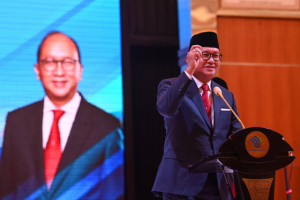
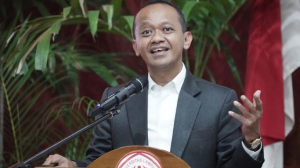
After a closed-door meeting with the president at the Merdeka Palace on Monday, September 15, 2025 Minister of Energy and Mineral Resources (ESDM) Bahlil Lahadalia said the government is welcoming foreign investors to help meet this ambitious target.
Bahlil cited that domestic manufacturing can currently produce only about 5 GW of solar capacity per year, making outside investment critical.
“We will definitely seek foreign investors who can collaborate with national businesses,” he said.
He added that partnerships between foreign investors, local entrepreneurs, and state-owned enterprises, such as State electricity company PLN, could accelerate Indonesia’s energy transition through large-scale solar projects.
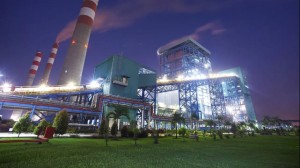
The government’s 100 GW initiative includes 80 GW of village-based PLTS combined with 320 gigawatt-hours (GWh) of battery energy storage under the Red-and-White village cooperative program, plus an additional 20 GW of centralized solar plants.
The project aims to provide reliable, affordable electricity to stimulate rural economies and aligns with President Prabowo’s Asta Cita development vision.
The Institute for Essential Services Reform (IESR), a Jakarta-based energy think tank, has recommended that these solar projects be managed directly by village communities to ensure long-term sustainability.
According to Alvin Putra, an IESR renewable energy analyst, many past rural electrification and centralized solar initiatives have become unsustainable or abandoned.
“This is also a community aspiration − why previous projects have not been maintained,” Alvin said during a media briefing on September 2, 2025.
IESR proposes an off-grid model that allows each village to operate its PLTS as an independent energy enterprise. Alvin noted that solar power’s flexibility makes it well-suited for remote areas and could be managed by local entities such as cooperatives or village-owned enterprises (BUMDes). Solar power is considered more economical and environmentally friendly than diesel generators typically used in isolated regions.
Beyond securing energy access, community-led management could generate new jobs and build local capacity. Residents could be trained as operators and project managers, fostering economic empowerment and strengthening rural institutions while advancing Indonesia’s renewable energy goals.
Already have an account? Sign In
-
Start reading
Freemium
-
Monthly Subscription
20% OFF$29.75
$37.19/MonthCancel anytime
This offer is open to all new subscribers!
Subscribe now -
Yearly Subscription
33% OFF$228.13
$340.5/YearCancel anytime
This offer is open to all new subscribers!
Subscribe now
Set up email notifications for these topics