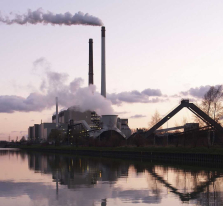



The government’s ambitious Food and Energy Estate project in Southern Papua is facing mounting criticism for its potential environmental damage and adverse impact on indigenous communities.
The project, which is set to involve large-scale land clearing in Merauke, Mappi, and Boven Digoel, has led to the declassification of protected forest areas and threatens the livelihoods of local indigenous peoples.
The plan, which aligns with Indonesia’s National Strategic Projects (PSN) in food and energy, involves the development of vast agricultural and energy projects, including the creation of a one-million-hectare rice plantation, 284,745 hectares of livestock farming, 633,000 hectares of sugarcane plantations for bioethanol production, and 382,759 hectares for palm oil plantations aimed at biodiesel production. This expansion, documented in revisions to the spatial planning regulations (RTRW) for South Papua, is slated to impact over 543,575 hectares of forest, with an additional 175,009 hectares of forest function conversion.
The decision is being facilitated by Minister of Forestry Decrees No. 430/2025 and No. 591/2025, which authorize the massive forest function changes and land-use shifts in the affected regions. The clearing of these areas is expected to cause significant deforestation, with up to 695,315 hectares at risk, including areas crucial for biodiversity conservation and indigenous communities dependent on intact forest ecosystems for their livelihoods.
Environmental and human rights advocates have condemned the project. Uli Arta Siagian, Forest and Plantation Campaign Manager for WALHI, called the initiative “colonial” in nature, describing it as a crime against both indigenous people and the environment.
Amalya Reza, Bioenergy Campaigner at Trend Asia, pointed out the contradiction between the government’s promises of forest restoration and its actions that will worsen environmental degradation in Papua. “This is a failure repeating itself,” she asserted in a statement on Wednesday, October 8, 2025.
The plan also threatens the rights of indigenous communities in Merauke, Asmat, Boven Digoel, and Mappi, whose survival is intricately linked to the forests, particularly the sago palms and wildlife they rely on for food. The project endangers 49 indigenous areas that are already at risk of displacement, as local communities face the loss of their ancestral lands and resources.
Critics argue that the project is part of a broader strategy to consolidate state control over forest and land resources, as evidenced by claims that the lands are "empty" and available for state occupation, which could further marginalize indigenous people.
Sutami from Pusaka Bentala Rakyat emphasized the unlawful nature of these claims, calling it an attempt to displace generations of indigenous communities from their traditional lands.
The project's implications for both the environment and indigenous peoples are far-reaching, with long-term consequences for biodiversity, local cultures, and the balance between development and conservation in Papua.
Already have an account? Sign In
-
Start reading
Freemium
-
Monthly Subscription
20% OFF$29.75
$37.19/MonthCancel anytime
This offer is open to all new subscribers!
Subscribe now -
Yearly Subscription
33% OFF$228.13
$340.5/YearCancel anytime
This offer is open to all new subscribers!
Subscribe now
Set up email notifications for these topics