


The Indonesian white cigarette industry has increasingly focused on exports to sustain factory operations, following a decline in domestic demand due to weakened purchasing power and excise hikes between 2020 and 2024.
Benny, Chairman of the Indonesian White Cigarette Entrepreneurs Association (Gaprindo), explained that consumers are shifting toward cheaper, illegal cigarettes that are untaxed. To avoid layoffs, manufacturers have opted to enter export markets despite high risks.
“Production machines must keep running even though the export market is quite risky. There was even a factory whose exports were rejected by the destination country due to regulatory changes,” Benny said on Monday, September 29, 2025.
He noted that cigarette production machines cannot remain idle for long, so some factories allocate up to 30 percent of their production capacity for exports in response to the weak domestic market.
Deputy Minister of Industry Faisol Riza reported that cigarette exports have increased more than 20 percent over the past three years. In 2024, export value grew nearly 21 percent year-on-year, reaching US$1.85 billion (Rp29.89 trillion).
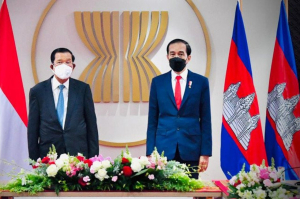
This performance makes Indonesia the fourth-largest exporter of tobacco products globally, with a market share of 6.08 percent, behind Poland, Germany, and the Czech Republic. Around 74 percent of Indonesia’s cigarette exports go to ASEAN countries, including the Philippines, Cambodia, Vietnam, Singapore, Malaysia, and Thailand. The Philippines is the largest market, importing cigarettes valued at US$378.76 million (Rp6.12 trillion).
Faisol highlighted that export growth is supported by Indonesia’s strategic location, competitive product quality, and a favorable investment climate. He emphasized the importance of maintaining the domestic cigarette industry ecosystem to support national foreign exchange.
The domestic tobacco industry is highly complex, encompassing internationally standardized testing laboratories, cigarette paper production, and street vendors. Last year, the sector employed nearly six million people.
“Indonesia’s tobacco industry has been established since the Dutch colonial era, creating a very strong domestic structure,” Faisol said on Monday.
Already have an account? Sign In
-
Start reading
Freemium
-
Monthly Subscription
20% OFF$29.75
$37.19/MonthCancel anytime
This offer is open to all new subscribers!
Subscribe now -
Yearly Subscription
33% OFF$228.13
$340.5/YearCancel anytime
This offer is open to all new subscribers!
Subscribe now
Set up email notifications for these topics