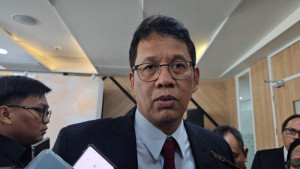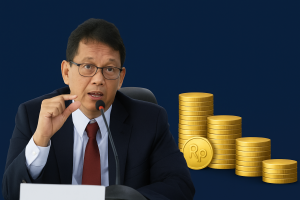



Paramadina University Rector Didik J. Rachbini has warned that the government’s decision to place Rp200 trillion (US$12 billion) of state funds in commercial banks could potentially violate constitutional and statutory provisions.
Didik, who is also a senior economist and founder of the Institute for Development of Economics and Finance (Indef), stressed that the management and allocation of the state budget (APBN) is strictly regulated under the 1945 Constitution, Law No. 17/2003 on State Finance, and the annual APBN Law.
“This is the official procedure and constitutional rule that must be followed, because the state budget belongs to the public, not a private company,” Didik said as quoted in a statement on Tuesday, September 16, 2025.
He further argued that the policy may contravene Law No. 1/2004 on State Treasury, particularly Article 22 paragraphs (4), (8), and (9). These provisions regulate the use of the State General Cash Account (RKUN), requiring that government spending be channeled through accounts at the central bank and only in amounts set under the APBN.
“Placing Rp200 trillion in commercial banks spontaneously also violates Article 22 paragraph (4),” he added, urging the president to intervene and stop the practice. “We must not weaken the rules of governance and institutions, as happened under previous administrations.”
Didik emphasized that government programs should go through proper legislative mechanisms, with clear budgeting, planning, and approval in the APBN.
“There should no longer be programs based on spontaneous recollections from doorstop interviews,” he said.
Finance Minister Purbaya Yudhi Sadewa has defended the policy, saying the Rp200 trillion placement would support several priority programs. These include People’s Business Credit (KUR), housing schemes under KUR, and job creation in the fisheries and maritime sector, particularly through the Red-and-White village cooperative (Kopdes) initiative.
Purbaya clarified that the government would not assign fixed allocations to specific programs.
“There are no set targets. Essentially, the funds are in the banking system. If banks channel them into KUR or Kopdes financing, that will happen automatically under the scheme,” he told reporters at the Presidential Palace on Monday, September 15, 2025.
Already have an account? Sign In
-
Start reading
Freemium
-
Monthly Subscription
20% OFF$29.75
$37.19/MonthCancel anytime
This offer is open to all new subscribers!
Subscribe now -
Yearly Subscription
33% OFF$228.13
$340.5/YearCancel anytime
This offer is open to all new subscribers!
Subscribe now
Set up email notifications for these topics