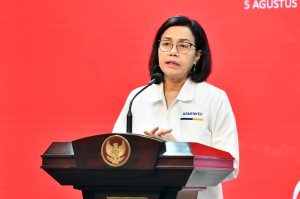



Minister of Finance Purbaya Yudhi Sadewa has dispelled doubts raised by various parties regarding the government’s decision to place Rp200 trillion (US$12.2 billion) of State funds in commercial banks in an effort to accelerate economic growth.
Critics have earlier argued that the move carries risks, as it comes at a time when banks already face excess liquidity while credit growth remains sluggish.
Purbaya, however, insisted the strategy remains relevant. He emphasized that injecting funds into the banking system would boost liquidity, which in turn could gradually lower market interest rates and benefit customers. He also projected that businesses would be more willing to take loans, thereby stimulating both demand and supply.
“If interest rates fall, people who previously preferred saving their money in banks will start spending,” he said on Tuesday, September 16, 2025.
He dismissed concerns that the additional liquidity would cause instability. “I’m not saying base money (M0) will grow 100 percent like in 1998. We think double-digit base money growth is sufficient to drive the economy,” Purbaya said.
The Rp200 trillion previously kept at the Indonesian Central Bank (BI) has now been allocated to State banks as follows: Rp55 trillion each to Bank Mandiri, BRI, and BNI; Rp25 trillion to BTN; and Rp10 trillion to Bank Syariah Indonesia (BSI).
Financial Services Authority (OJK) Chairman Mahendra Siregar noted that this policy has significantly boosted banking liquidity. This is reflected in the liquidity-to-deposit ratio (AL/DPK), which has returned to above 20 percent. He added that the move improves banks’ ability to disburse credit.
“Some state-owned banks previously had loan-to-deposit ratios (LDR) above 90 percent. With this Rp200 trillion injection, their LDRs have now fallen below 90 percent,” Mahendra said, while citing that this will give banks greater room to extend loans, especially to debtors with viable credit proposals and projects.
“Ultimately, it is up to banks to decide which projects are feasible,” he added.
Mahendra also stressed the importance of directing the additional liquidity toward priority sectors, while ensuring risk management remains within prudential standards.
The government confirmed that the Rp200 trillion fund placement will focus on programs such as People’s Business Credit (KUR), housing finance through KUR, job creation in the marine and fisheries sector, and the Red-and-White village cooperative initiative.
Already have an account? Sign In
-
Start reading
Freemium
-
Monthly Subscription
20% OFF$29.75
$37.19/MonthCancel anytime
This offer is open to all new subscribers!
Subscribe now -
Yearly Subscription
33% OFF$228.13
$340.5/YearCancel anytime
This offer is open to all new subscribers!
Subscribe now
Set up email notifications for these topics