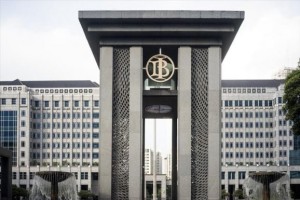



A proposal by the government, led by Finance Minister Purbaya Yudhi Sadewa, to move Rp200 trillion (US$13.2 billion) from the state’s reserves held by the Indonesian Central Bank (BI) to the State-Owned Banks Association (Himbara) has sparked concern among economic experts and environmental advocates.
While the move is intended to enhance liquidity for state-owned banks, critics warn it could lead to more financing for fossil fuel projects, hampering Indonesia’s efforts to transition to renewable energy and exacerbate the risks of non-performing loans in the banking sector.
Bhima Yudhistira, Executive Director of the Center for Economic and Law Studies (CELIOS), highlighted the risks of this plan, stating that the funds could be disproportionately directed towards financing loans for the fossil fuel sector rather than funding climate projects or renewable energy development.
“Minister Purbaya must exercise caution. These funds cannot simply be handed over to Himbara for financing purposes. There is a significant risk of stranded assets and non-performing loans if this funding is used to support fossil fuel projects,” Bhima said as quoted in a statement on Friday, September 12, 2025.
In response, Bhima called for the implementation of clear regulations and agreemnts to ensure the funds are managed in line with President Prabowo Subianto’s goal of achieving 100 percent renewable energy within the next decade. He suggested that the funds should be specifically targeted at sectors that foster job creation and sustainable economic growth, particularly renewable energy, which has the potential to create 19.4 million "green jobs" over the next 10 years.
"The additional liquidity for Himbara should not just drive credit growth; it should be strategically directed towards sectors like renewable energy, which can support economic growth while addressing climate goals," Bhima added. "Currently, less than 1 percent of Himbara's credit portfolio goes to the renewable energy sector. The government’s plan to shift funds from BI to Himbara should be seen as an opportunity to drive the transition towards a more sustainable and future-oriented economy.
Dwi Wulan, Policy Strategist at CERAH Foundation, echoed these concerns, emphasizing that the funds should primarily be allocated to renewable energy projects. Indonesia's renewable energy potential stands at 3,687 gigawatts (GW), yet only 13 GW − or less than 1 percent − has been utilized. "By strengthening funding for clean energy, Indonesia can stabilize its economy and energy infrastructure, while simultaneously reducing fiscal risks and affirming its climate commitments," Wulan said.
Wulan also projected that Indonesia’s industrialization, including the downstream processing of nickel, copper, and bauxite, would require an additional 50-60 GW of electricity by 2040. “If this energy demand is still met with fossil fuels, the risk of stranded assets will be very high,” she warned. “That’s why the government and Himbara must adopt and strengthen Environmental, Social, and Governance (ESG) frameworks in directing these funds.”
Novita Indri, Energy Campaigner for Trend Asia, stressed that financing for fossil fuel sectors such as coal must be halted to avoid undermining Indonesia's climate goals.
"Allowing funding to flow into fossil fuels would not only hinder Indonesia’s progress towards the Paris Agreement but also worsen the country’s climate crisis and tarnish President Prabowo’s global reputation," Novita said.
This concern is reflected in the findings of the #BersihkanBankmu report, which revealed that Himbara banks significantly increased financing for coal projects from 2021 to 2024. Five major Indonesian banks, including three in Himbara (Bank Mandiri, BRI, and BNI), provided up to US$5.6 billion in loans to the country's largest coal companies. Notably, Bank Mandiri was the largest lender, providing US$3.2 billion in loans.
As the Indonesian government moves forward with its plan, experts urge strict oversight to ensure the funds are allocated to projects that align with the nation’s long-term climate and energy goals, ultimately safeguarding both economic stability and Indonesia’s role in global environmental leadership.
Already have an account? Sign In
-
Start reading
Freemium
-
Monthly Subscription
20% OFF$29.75
$37.19/MonthCancel anytime
This offer is open to all new subscribers!
Subscribe now -
Yearly Subscription
33% OFF$228.13
$340.5/YearCancel anytime
This offer is open to all new subscribers!
Subscribe now
Set up email notifications for these topics