


Indonesia Business Post
The Food and Drug Monitoring Agency (BPOM) has called for greater attention to food safety protocols after several recent mass food poisoning cases, one of which affected over 470 individuals in Rejang Lebong, Bengkulu on August 27, 2025.
Officials have considered these events meeting the criteria for being classified as Extraordinary Events (KLB) under Indonesia’s Food Law No. 18/2012.
Director of Community Empowerment and Processed Food Business at the BPOM, Agus Yudi Prayuda, said that under the law, a food-related incident can be considered a KLB if at least two individuals experience similar symptoms after consuming the same food.
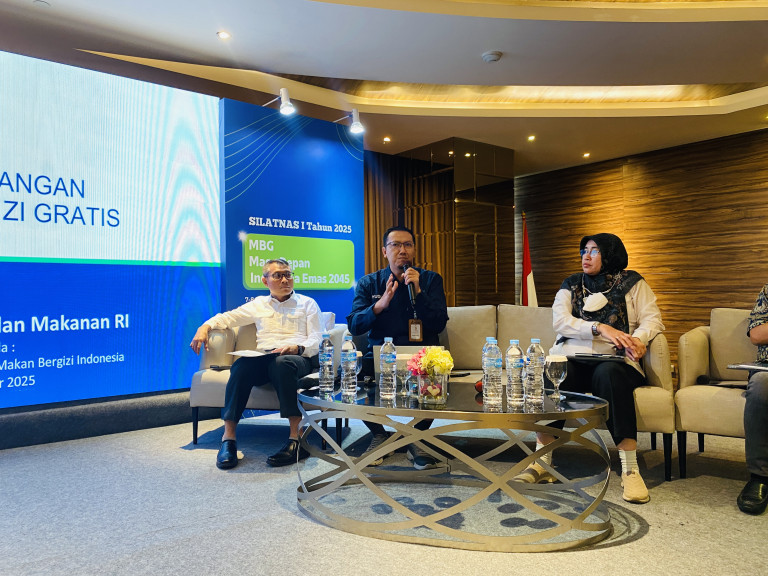
“So yes, even just two victims are enough to classify it as a KLB. What happened in Bengkulu with over 470 individuals affected is far beyond that threshold,” Prayuda said during a National Gathering of the Indonesian Association of Nutritious Food Entrepreneurs (Gapembi) in Jakarta on Monday, September 8, 2025.
He emphasized the importance of tracing and controlling every point in the food supply chain, especially in large-scale food distribution programs. “There are several stages that need to be closely monitored, from sourcing raw materials, proper storage, processing, cooking, and distribution. Each step carries its own critical control points,” he said.
BPOM, in collaboration with the National Food Agency (BGN) and the National Defense University (UNHAN), has provided food safety training for food service providers under government-run food distribution programs. These sessions include modules on critical hazard points and the importance of maintaining hygiene throughout the preparation and delivery process.
An internal investigation into recent KLB events revealed that most cases were caused by microbiological contamination, likely from bacteria that proliferated due to poor handling or storage. “There are clear indications that the food was contaminated by bacteria, which then caused widespread poisoning,” Prayuda said.
To mitigate future outbreaks, BPOM is urging all stakeholders particularly those involved in mass food provision to adhere to the “Five Keys to Safer Food”: keeping raw and cooked food separate, maintaining cleanliness, ensuring thorough cooking, storing food at safe temperatures, and using clean water and raw materials.
Prayuda concluded by appealing to all food-related institutions and task forces to actively manage the risks at every stage of the food supply chain. “Every step contains a risk. We need a disciplined, collective effort to ensure this doesn’t happen again,” he said.
Already have an account? Sign In
-
Start reading
Freemium
-
Monthly Subscription
20% OFF$29.75
$37.19/MonthCancel anytime
This offer is open to all new subscribers!
Subscribe now -
Yearly Subscription
33% OFF$228.13
$340.5/YearCancel anytime
This offer is open to all new subscribers!
Subscribe now
Set up email notifications for these topics