



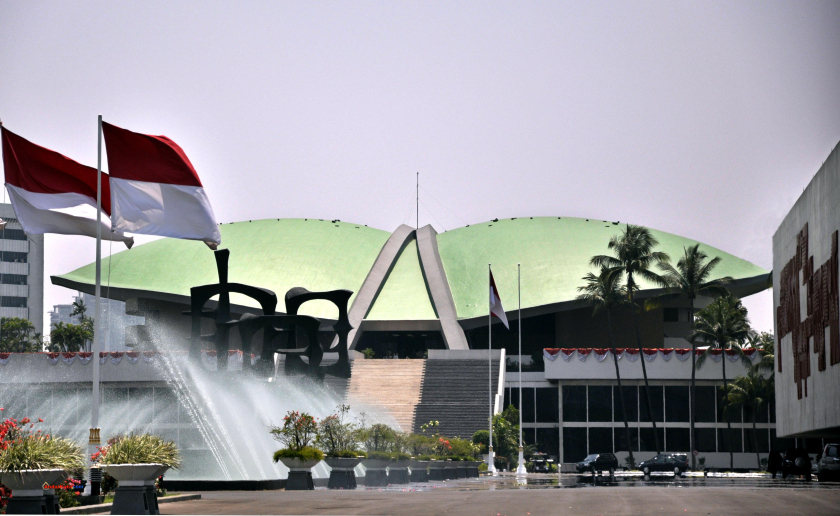
gedung-DPR-RI
The Centre for Strategic and International Studies (CSIS) has highlighted that the majority of Indonesia’s legislators come from elite or upper-class backgrounds, creating a widening gap between public needs and parliamentary decisions.
Edbert Gani Suryahudaya, a researcher at CSIS’s Department of Politics and Social Change, said the composition of members in both the national parliament (DPR) and regional legislatures (DPRD) still does not reflect broader representation of ordinary citizens.
“Only about 5.1 percent of legislators have working-class backgrounds. This creates a growing distance between public aspirations and what parliament actually does,” Edbert said during the launch of CSIS’s study “Wake-up Call from the Streets: The Test of Our Democracy and Economy”, broadcast on the CSIS Indonesia YouTube channel on Tuesday, September 2, 2025.
The CSIS survey also found that more than 50 percent of political party leadership structures consist of business figures, from the central level down to the regions.
“So it matches: the political parties and the elected legislators end up representing only certain social classes,” Edbert noted.
He further argued that parliament’s role as a legislative body representing the people’s aspirations has shifted, as both DPR and DPRD now appear more aligned with executive interests. This trend, he warned, weakens the democratic principle of checks and balances.
“Parliament has increasingly functioned as a support system for the executive. The tendency to align more closely with the government has only grown stronger in recent years,” he said.
Already have an account? Sign In
-
Start reading
Freemium
-
Monthly Subscription
20% OFF$29.75
$37.19/MonthCancel anytime
This offer is open to all new subscribers!
Subscribe now -
Yearly Subscription
33% OFF$228.13
$340.5/YearCancel anytime
This offer is open to all new subscribers!
Subscribe now
Set up email notifications for these topics