


The Indonesian government is set to issue a new Presidential Regulation (Perpres) to replace three existing regulations on waste management, in a move aimed at streamlining bureaucracy and improving the waste-to-energy business model, which has long been considered complex and less attractive for developers.
The policy shift is expected to benefit energy companies engaged in waste management and renewable energy, including PT TBS Energi Utama (TOBA), PT Maharaksa Biru Energi (OASA), and PT Multi Hanna Kreasindo (MHKI).
The three regulations to be replaced include Presidential Regulation No. 83/2018 on Marine Waste Management, Presidential Regulation No. 35/2018 on Accelerating Waste-to-Energy Power Plant Development, and Presidential Regulation No. 97/2017 on the National Policy and Strategy for Household Waste Management.
The new regulations will introduce measures such as the closure of open dumping landfill systems and provisions for advancing Waste-to-Energy (WTE) technologies. According to NH Korindo Sekuritas Indonesia, the revision of tariffs and simplification of licensing procedures in waste management could create a more favorable investment climate.
One of the key highlights is a new electricity tariff proposed by PLN for Waste-to-Energy Power Plants (PLTSa), set at 22 US cents per kWh − up from the previous 13 US cents per kWh.
In addition, the tipping fee scheme is likely to be abolished, making partnerships between developers and state power utility firm PLN more efficient and commercially attractive.
NH Korindo projects that several companies will benefit:
TOBA has drawn investor attention following its acquisition of Sembcorp Enviro, with plans to focus on waste management operations.
OASA is currently building a PLTSa in East Jakarta, expected to begin operations in Q1 2026, alongside a 25 MW PLTSa project in Cipeucang, South Tangerang.
MHKI, already managing waste in Bantargebang, Bekasi, is preparing to expand into new waste management projects, including operations in Lamongan, East Java.
Stock market analyses indicate TOBA’s support levels at Rp1,000–1,050 and Rp1,150–1,250, with resistance at Rp1,500 and Rp1,800. OASA has support at Rp210–230 and resistance near Rp396, while MHKI holds support at Rp125–140 and resistance at Rp 145–200.
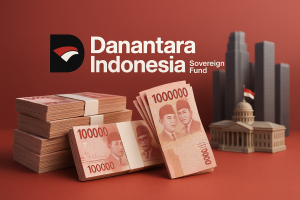
Beyond regulatory reform, these companies are also poised to benefit from the upcoming Patriot Bond issuance by Danantara, valued at Rp50 trillion. The bond, offered with a 2 percent annual coupon and maturities of five and seven years, will finance energy transition projects, including waste-to-energy facilities across 33 regions. Although the coupon is lower than Indonesia’s 10-year government bond yield of around 6.4 percent, special incentives are expected to attract investors.
Meanwhile, the Ministry of Environment and the Environmental Agency (BPLH) are targeting the recycling of 33,000 tons of plastic waste per day into renewable energy, part of a broader effort to reduce Indonesia’s mounting waste burden, which currently totals about 140,000 tons daily.
Already have an account? Sign In
-
Start reading
Freemium
-
Monthly Subscription
20% OFF$29.75
$37.19/MonthCancel anytime
This offer is open to all new subscribers!
Subscribe now -
Yearly Subscription
33% OFF$228.13
$340.5/YearCancel anytime
This offer is open to all new subscribers!
Subscribe now
Set up email notifications for these topics