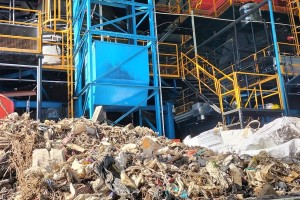


The Indonesian government is taking measures to accelerate its waste-to-energy initiatives by involving state investment body BPI Danantara and simplifying licensing processes as part of the effprts to attract more investors and modernize urban waste management.
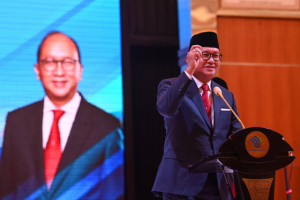
Addressing a coordination cabinet meeting on Monday, May 26, 2025 regarding the drafting of a new Presidential Regulation (Perpres), Coordinating Minister for Food Affairs Zulkifli Hasan said that BPI Danantara will be actively involved in acquiring technology to convert waste into electricity.
“The Minister of Environment will be responsible for selecting the appropriate technology, in collaboration with Danantara and with permits from the Ministry of Energy and Mineral Resources (ESDM),” Zulkifli said on Monday, May 26, 2025.
He acknowledged that Indonesia has fallen behind other nations in waste management and emphasized that the current focus is on transforming waste into a renewable energy source.
To support this transition, the government is preparing a new Perpres aimed at eliminating red tape that has long hindered the waste-to-energy sector. Currently, waste processing projects must obtain approvals from multiple institutions, including local governments, the Ministry of Finance, and the Ministry of Energy − a process that discourages investors.
“We will cut down the licensing chain, both at the central and local government levels,” Zulkifli said.
A major breakthrough in the new policy involves consolidating three existing Presidential Regulations into a single, more efficient legal framework. The new regulation will unify:
● Perpres No. 97/2017 on the National Waste Management Policy and Strategy;
● Perpres No. 35/2018 on Accelerating the Development of Environmentally Friendly Waste-to-Energy Facilities;
● Perpres No. 83/2018 on Marine Waste Management.
Once merged, investors planning to build waste-processing plants will no longer need to navigate approvals from regional legislative councils (DPRD), local administrations, or multiple ministries. Instead, they will be able to work directly with the Ministry of Energy and Mineral Resources and state-owned electricity company PT PLN.
“This simplification will help encourage investment in waste management and energy generation, sectors that are vital for our sustainability goals,” Zulkifli cited.
By cutting bureaucratic barriers and providing a clear pathway for investment, Indonesia hopes to transform its urban waste challenge into a renewable energy opportunity − bringing both environmental and economic benefits.
Already have an account? Sign In
-
Start reading
Freemium
-
Monthly Subscription
20% OFF$29.75
$37.19/MonthCancel anytime
This offer is open to all new subscribers!
Subscribe now -
Yearly Subscription
33% OFF$228.13
$340.5/YearCancel anytime
This offer is open to all new subscribers!
Subscribe now
Set up email notifications for these topics