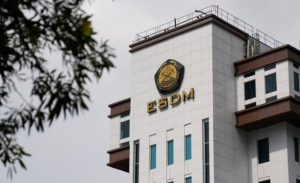



Minister of Energy and Mineral Resources (ESDM) Bahlil Lahadalia has held talks with Chinese solar photovoltaic (PV) manufacturer Trina Solar to broaden cooperation in developing Indonesia’s domestic solar energy supply chain and ecosystem.
"We know Indonesia’s solar energy potential reaches thousands of gigawatts, so it is necessary to explore partnerships with solar PV manufacturers. This will allow us to optimize our vast potential to achieve energy security and self-sufficiency," Bahlil said on Thursday, August 14, 2025.
One key focus of the meeting was enhancing collaboration with PT Trina Mas Agra Indonesia (TMAI), a joint venture between Trina Solar and local partners operating in the Kendal Special Economic Zone, Central Java.
Established in 2023, TMAI is Indonesia’s first tier-1 integrated plant for solar cell and module production, with an initial capacity of 1 GWp per year and expansion plans to reach 3 Gigawatts (GW) within the next two to three years. The facility utilizes high-efficiency i-TOPCon N-type technology.
TMAI’s presence is expected to reduce dependence on imported energy industry components and accelerate industrial downstreaming. The company also plays a role in building a comprehensive domestic solar energy ecosystem − both horizontally, through supporting industries, and vertically, through upstream production of wafers, ingots (mainly silicon used in the semiconductor industry), and polysilicon smelter development.
Talks with Trina Solar are also anticipated to open further opportunities for optimizing domestic solar supply chain development. Increasing the capacity of solar cell and module production with TMAI is seen as a way to meet rising domestic energy demand while reducing reliance on imports.
The partnership could also extend to adopting and transferring advanced technologies, developing integrated energy solutions from research and manufacturing to project development, as well as implementing Internet of Things (IoT)-based systems and battery energy storage systems (BESS).
This collaboration aligns with President Prabowo Subianto’s ambitious plan to build 100 GW of solar power plants, including village-scale solar projects under the Village Cooperative scheme. The government believes that investment and technology transfer from global producers will accelerate the realization of this target.
According to the ESDM Ministry, Indonesia holds a solar energy potential of up to 3,294 Gigawatt Peak (GWp), yet as of December 2024, only about 912 Megawatts (MW) have been utilized.
Bahlil noted that Indonesia has the opportunity to become a leader in the regional and global energy transition, stressing the need for optimization in planning cleaner yet reliable power generation.
Already have an account? Sign In
-
Start reading
Freemium
-
Monthly Subscription
20% OFF$29.75
$37.19/MonthCancel anytime
This offer is open to all new subscribers!
Subscribe now -
Yearly Subscription
33% OFF$228.13
$340.5/YearCancel anytime
This offer is open to all new subscribers!
Subscribe now
Set up email notifications for these topics