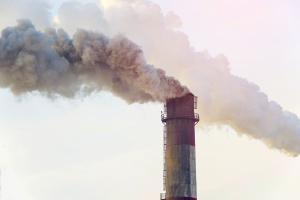



Manufacturing industries are pivotal to achieving the 8 percent economic growth target set by the Prabowo Subianto administration as Indonesia's economy heavily relies on extractive industries, domestic consumption, and government spending.
However, extractive industries, which depend on natural resources like coal, cannot lead to sustainable prosperity and are incompatible with the government's goal of achieving net-zero emissions by 2050.
Tata Mustasya, Executive Director of the Sustainable Welfare Foundation Indonesia (SUSTAIN), emphasized that the manufacturing sector, particularly, has been stagnating since the early 2000s, coinciding with the rising dominance of extractive industries like coal.
"Manufacturing industries can play a dual role: supporting the achievement of the 8 percent growth target and promoting welfare, while also contributing to the 2050 Net-Zero Emission target. Here, green industrialization is key," Tata said as quoted in a statement on Tuesday, August 12, 2025 .
The global shift towards a green economy presents numerous opportunities, and Indonesia risks becoming merely a market if it fails to embrace green industrialization.
Measures to do
First, existing manufacturing industries must transition to using clean and renewable energy to reduce emissions. According to a recent survey “Powering up: Business perspectives on shifting to renewable electricity”, nine out of 10 Indonesian business leaders seek an energy transition, particularly in the electricity sector, from coal and other fossil fuels to renewable energy by 2035 or earlier.
Moreover, most respondents are considering relocating their businesses and supply chains to other countries if the Indonesian government fails to provide renewable energy.
In its latest General Electricity Supply Plan (RUPTL 2025-2034), the government has set a significant renewable energy target, aiming for 61 percent of total power generation capacity to come from renewable sources in the next decade, up from the previous target of 52 percent. The development of electric vehicle manufacturing hubs in West Java will also be supported by clean, renewable energy sources like wind power.
Second, the government must develop green industries in line with global economic trends. This includes seizing opportunities in the growing electric vehicle and solar panel markets, both domestically and regionally. Green industrialization can create jobs, stimulate economic growth, and boost exports.
"The design must be inclusive, aiming to promote welfare," Tata said.
To develop a widespread green industry with a significant impact on community welfare, the government must prepare a comprehensive strategy. This strategy should include fiscal and financial policies, sectoral and industrial policies such as technology transfer, and the involvement of state-owned enterprises (SOEs).
“Policies must also ensure that green industrialization uses natural resources efficiently and adheres to strict environmental and social standards,” Tata concluded.
Already have an account? Sign In
-
Start reading
Freemium
-
Monthly Subscription
20% OFF$29.75
$37.19/MonthCancel anytime
This offer is open to all new subscribers!
Subscribe now -
Yearly Subscription
33% OFF$228.13
$340.5/YearCancel anytime
This offer is open to all new subscribers!
Subscribe now
Set up email notifications for these topics