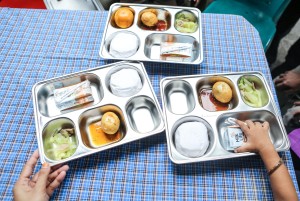



Indonesia Corruption Watch (ICW) has criticized the lack of transparency in the procurement of food trays for the Free Nutritious Meal (MBG) program.
Wana Alamsyah, a researcher at ICW, emphasized that they have not yet obtained clear information regarding the procurement price of the food trays.
"However, this policy also opens the door for entrepreneurs and suppliers to earn higher profits with high sales prices, even when the goods can be obtained at cheaper prices in the market. Our sources believe that this policy creates a gap for the misuse of state fund," he said.
Alamsyah stressed that to prevent potential corruption or price manipulation, information related to the MBG procurement, including the price of each food tray unit, should be publicly disclosed.
"Ideally, all information regarding the procurement of goods for the MBG program should be announced and included in the public procurement process, so that the public can monitor it carefully," he said.
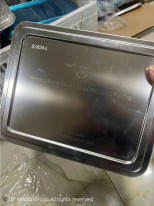
The Indonesia International Gift and Warehouse Expo, held at the JI Expo Jakarta from August 6-8, 2025, showcases flagship products of Chinese companies, one of which is stainless steel food trays for the MBG Program. The food tray prices displayed ranged from Rp20,000 to Rp 30,000 (US$1.2 to US$1.8) per unit, depending on the size and specifications of the product.
Several leading companies attending the event offered highly competitive prices for their food trays.
"The price for the food tray is US$1.8 or around Rp30,000," Rebecca from Guangdong Shunfa Hardware Products Co. Ltd, said on August 7, 2025.
The company also revealed that they have a very high production capacity, capable of producing up to 1,000,000 units per month. "We are very interested in establishing a relationship with the Indonesian market, especially concerning the school feeding program," she cited, in response to the growing demand in Indonesia.
Yvonnena from Guangdong Golden Key Hardware Industry Co. Ltd. offered their food trays at US$1.7. "We can produce up to 50,000 units per day and have been shipping five containers per month to each of our clients in Indonesia," she said.
She claimed that her company had established relationships with several clients in Indonesia and hoped to supply more products for Indonesia's government programs that require food trays for school children.
Kristian, a representative from Linwu Industrial Zone, Guangdong, said, "The food trays we offer range from Rp20,000 to Rp25,000 per unit, depending on the type and size. We can produce up to 20,000 units per day and have sold our products to various regions in Indonesia, including Jakarta and Surabaya."
Meanwhile, Chen Bingling from Zouzou Shengsheng Hardware Products revealed that their food trays ranged between Rp21,668 to Rp27,370 per unit, with a production capacity of up to 50,000 units every two days.
"We have shipped products to Indonesia, and the average delivery time is around 13 days," Chen said.
Price discrepancy
A source within the industry spoke to Indonesia Business Post that food trays sold at the expo are significantly cheaper compared to those purchased by the government through the National Nutrition Agency (BGN). According to information obtained by the source, the food trays procured by BGN are priced extremely high, reaching Rp80,000 per unit, while the import price is around Rp23,000 per unit.
This stark difference shows that the price paid by the government is nearly four times more expensive than the import price. This raises questions about the transparency and efficiency of the government's procurement process.
The government, which should be responsible for ensuring the efficient use of state funds, now faces sharp criticism from various corners as one main reason for opening the food tray importation is to meet the large-scale needs for the free nutritious meal program run by the government. However, this policy opens the door for importers to profit from selling the food trays at higher prices, even though they can be obtained at much lower prices from China.
The source argues that this policy creates a loophole for potential misuse of state funds, particularly since the price the government will pay, indirectly through the leasing system to partners, is still much higher than necessary.
As of now, ICW has not received detailed data on the procurement of food trays used in the MBG program, but Alamsyah emphasized that ICW continues to monitor the process.
"We do not have the exact data on the procurement price of each food tray yet, but we will continue to monitor and publish the results of our oversight on the ICW website," he said.
Clarification from BGN
BGN Head Dadan Hindayana said in a statement that the agency has not made any purchases of food trays or related equipment for their nutrition programs.
He clarified that the food trays currently used are not purchased by BGN, but by their partners. This was in response to reports that claimed BGN purchased food trays at prices as high as Rp80,000 per unit.
"BGN has not spent a single rupiah on purchasing food trays or any other equipment," Hindayana said. "The trays currently in use were purchased by our partners," he added, dismissing claims regarding the prices and procurement process.
Already have an account? Sign In
-
Start reading
Freemium
-
Monthly Subscription
20% OFF$29.75
$37.19/MonthCancel anytime
This offer is open to all new subscribers!
Subscribe now -
Yearly Subscription
33% OFF$228.13
$340.5/YearCancel anytime
This offer is open to all new subscribers!
Subscribe now
Set up email notifications for these topics