

An environmental watchdog has warned of the environmental implications of the Indonesia-U.S. trade tariff deal that will grant the U.S. market access to key commodities, including critical ones, from Indonesia while Indonesia has agreed to remove export restrictions on these commodities.
This agreement has sparked debate, particularly over the future of Indonesia’s raw mineral export ban, which was previously part of the 2020 Mining Law.
Environmental group Satya Bumi has warned that the deal could result in Indonesia reversing its ban, especially considering the current political landscape, where the government is backed by the pro-business Coalition of Indonesia’s Progress.
In a direct response to the deal, Satya Bumi’s Campaign Manager, Sayyidatiihayaa Afra, questioned whether the U.S. would open critical mineral mines, much like France’s Eramet project.
"Jargon of downstreaming and the added value of critical minerals are being questioned. Will America open critical mineral mines like France with Eramet?" Afra said in a statement on Wednesday, August 6, 2025.
The deal also coincides with major revisions in Indonesia’s mining regulations, which have seen several changes from 2020 to 2025, all aimed at pushing forward the downstream processing of critical minerals. These revisions have been made with little public consultation and have weakened environmental safeguards, leading to concerns over deforestation, environmental pollution, and displacement of indigenous communities near mining sites.
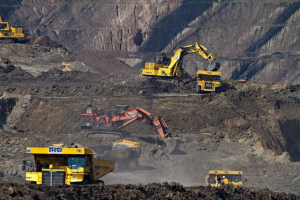
Afra further emphasized the environmental costs, noting that Indonesia’s relentless pursuit of nickel exports has led to the deforestation of 75,000 hectares of forest in 2024 and threatened another 1.2 million hectares.
"This trade deal, which seems like business as usual, is dangerous for efforts to protect human rights and the environment in critical mineral mining industries," Afra said.
The deal also places Indonesia in a precarious position with regard to its sovereignty over its natural resources. While the U.S. lacks domestic nickel mining capabilities, companies like Westwin Elements are building refineries in Oklahoma, supported by MLB Industrial Australia, to process nickel sourced from Indonesia. This has raised further concerns about Indonesia's role as a raw material supplier for developed countries while sacrificing its environmental and social integrity.
Afra concluded, “Indonesia should not trade its last tropical rainforests for empty promises of investments that undermine its ecological and social sovereignty. The
government must ensure that every nickel export is free from deforestation, exploitation, and pollution.”
Without transparent supply chains and independent environmental audits, the trade deal may become a new chapter in what Afra described as “green colonialism,” where the needs of developed countries once again put the future of the planet and Indonesia’s next generation at risk.
Already have an account? Sign In
-
Start reading
Freemium
-
Monthly Subscription
20% OFF$29.75
$37.19/MonthCancel anytime
This offer is open to all new subscribers!
Subscribe now -
Yearly Subscription
33% OFF$228.13
$340.5/YearCancel anytime
This offer is open to all new subscribers!
Subscribe now
Set up email notifications for these topics