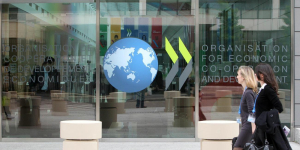



Indonesian environmental group Satya Bumi has called for urgent reforms in the country’s nickel industry during the OECD Forum on Responsible Mineral Supply Chains, held from May 5–7, 2025 in Paris.
Joined by local organization Sagori from Kabaena Island, as well as international partners Fern and Rainforest Foundation Norway (RFN), Satya Bumi presented disturbing findings about the environmental and human rights impacts of nickel mining in Southeast Sulawesi.
Speaking in the session “EU Electric Vehicle Targets: Assessing Human Rights Implications, Deforestation Risks and Industry Readiness,” Satya Bumi highlighted the ecological degradation and social harms caused by nickel mining, particularly on Kabaena Island − a small island of just 891 km² now home to 15 mining permits covering 655 km².
“Is it true that our nickel and stainless steel are used for the energy transition, and not for war or occupation?” Sayyidatiihayaa Afra or Hayaa, a representative of Satya Bumi, said as quoted in a statement on Friday, May 9, 2025.
“How can we, the people of Indonesia, know this without a transparent supply chain?”
According to Satya Bumi’s latest research, heavy contamination of local waters with toxic metals − including nickel, cadmium, arsenic, mercury, and lead − has rendered seafood unsafe for consumption. Urine samples from local residents showed nickel levels 5 to 30 times higher than normal, with environmental levels exceeding World Health Organization (WHO) and U.S. Environmental Protection Agency (EPA) safety limits by up to 7,000 percent.
The group linked this pollution to increased cancer rates, respiratory illnesses, and even partial blindness in local communities. “Those who profit the most are rarely the ones who take responsibility,” Hayaa said, criticizing the lack of corporate accountability and environmental restoration efforts.
Satya Bumi urged the international community to pressure the Indonesian government to strengthen legal protections from project planning to remediation. They also called for robust recovery mechanisms, especially in coastal and island regions such as Sulawesi, Halmahera, and Papua, and for an end to nickel exploitation disguised as a “just energy transition.”
“True transition must not come at the cost of local people and the environment,” Hayaa emphasized.
Already have an account? Sign In
-
Start reading
Freemium
-
Monthly Subscription
20% OFF$29.75
$37.19/MonthCancel anytime
This offer is open to all new subscribers!
Subscribe now -
Yearly Subscription
33% OFF$228.13
$340.5/YearCancel anytime
This offer is open to all new subscribers!
Subscribe now
Set up email notifications for these topics