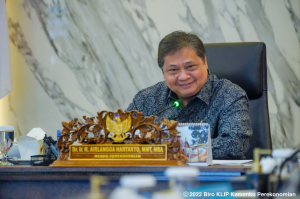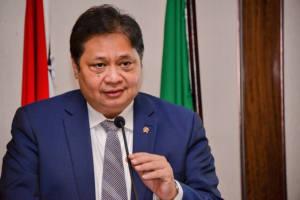



Deputy for Energy and Mineral Resources Coordination at Indonesia’s Coordinating Ministry for Economic Affairs, Elen Setiadi, stated that the government’s ambitious Asta Cita framework aligns with its environmental sustainability goals. “Industrial development and economic growth for public welfare and food security are in harmony. It’s about balancing growth with environmental preservation,” Elen said during the Indonesia Net-Zero Summit 2025 in Jakarta on Saturday, July 26, 2025.
Elen emphasized that while Indonesia holds vast mining potential—particularly in coal—it is adjusting to domestic and international demands by advancing renewable energy development.
However, this claim was challenged by Greenpeace Indonesia Country Director Leonardo Simanjuntak, who argued that many government initiatives remain inconsistent with environmental preservation principles.
“The current scenarios remain ‘business as usual.’ Add to that the highly ambitious economic growth targets—this is alarming,” Leo warned, on Saturday, July 26, 2025..
He specifically criticized the government’s food security strategy, citing the controversial food estate plan in Merauke, which aims to convert 2 million hectares of land. According to Leo, the project threatens biodiversity and tropical rainforests, undermining Indonesia’s FOLU Net Sink and net-zero land-use emission targets.
“The government also lacks consistency in its environmental commitments,” Leo added. “It wants to be a global leader in batteries and EVs but continues to recklessly exploit the environment.”
Farwiza Farhan, founder and chair of the Forest, Nature, and Environment of Aceh Foundation, echoed similar concerns. She warned that Indonesia’s aggressive growth ambitions are heavily reliant on large-scale land exploitation, which often leads to disasters.
“Communities are the most affected—losing homes and agricultural livelihoods,” she said, adding that post-disaster recovery is often inadequate. “What does the government do? Distributes boxes of instant noodles and social aid—measures that don’t improve long-term welfare,” Farwiza said, on Saturday, July 26, 2025..
Agus Sari, CEO of Landscape Indonesia, stressed that Indonesia’s economic vision must integrate green, innovative, and equitable principles. Without this, he said, achieving 8% growth is unrealistic.
“Floods come at a cost—and it’s not the polluting companies paying, but the public,” Agus said, on Saturday, July 26, 2025.. He called for holistic cost assessments and smarter growth planning. His proposals include scaling up renewable energy, agroforestry, and critical land rehabilitation using food crops. “Food should be grown close to consumers. Don’t plant it in remote areas without infrastructure, where farmers are untrained and transport ports don’t exist,” he warned.
Agus also warned that inequitable growth could drag the middle class back into poverty. Inclusive policies, he argued, would better support the energy transition.
Responding to the criticism, Elen reiterated that the government’s transition efforts are ongoing and measurable. He pointed to Indonesia’s early adoption of B40 biodiesel—far ahead of many other nations—as an example of concrete progress.
Already have an account? Sign In
-
Start reading
Freemium
-
Monthly Subscription
20% OFF$29.75
$37.19/MonthCancel anytime
This offer is open to all new subscribers!
Subscribe now -
Yearly Subscription
33% OFF$228.13
$340.5/YearCancel anytime
This offer is open to all new subscribers!
Subscribe now
Set up email notifications for these topics