


The upstream oil and gas sector continues to show positive momentum in 2025, although key production metrics remain below government targets.
Data released by the Upstream Oil and Gas Regulatory Task Force (SKK Migas) shows the country’s oil lifting reached 578,000 barrels of oil per day (BOPD) as of June 2025, slightly higher than the 576,100 BOPD recorded in the same period last year but still below the 2025 state budget (APBN) target of 605,000 BOPD.
Despite the shortfall, SKK Migas remains confident in meeting the annual target.
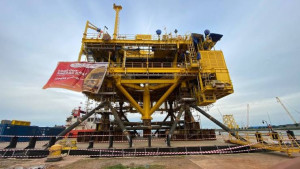
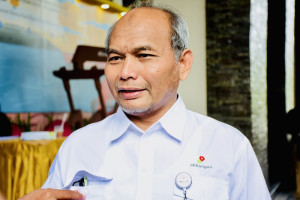
“Since July, we have seen a steady upward trend in production, especially after the inauguration of the Forel and Terubuk fields in the Riau Islands in May,” SKK Migas Head, Djoko Siswanto, told a press conference in Jakarta on Monday, July 21, 2025.
“These projects are expected to contribute an additional 20,000 BOPD and 60 million standard cubic feet of gas per day (MMSCFD),” he said.
He added that production growth from established assets like Banyu Urip in East Java will also be critical in closing the gap by year-end. “We are doing our utmost to reach the 605,000 BOPD target by December,” he cited.
Indonesia has long faced a structural decline in oil production due to the natural depletion of mature wells, which dominate its upstream portfolio. The country currently produces only around 600,000 BOPD while domestic consumption reaches approximately 1.6 million BOPD forcing the government to rely heavily on crude oil imports.
In response, SKK Migas is accelerating development activities, particularly the drilling of new development wells. The agency recorded 409 wells drilled in the first half of 2025, toward an annual target of 993 wells. In comparison, 899 wells were completed in 2024.
“Development drilling is a backbone of oil production sustainability. The number of wells we’re drilling has increased over time,” SKK Migas Deputy for Exploitation, Taufan Marhaendrajana, said.
He acknowledged, however, that the pace of drilling often falls short of target due to operational disruptions,such as unpredictable floods and delays in land acquisition.
Exploration activities also remain a key strategy in boosting future output. As of June 2025, Indonesia recorded 10 successful discoveries from 18 exploration wells tested, yielding a 56 percent success ratio. SKK Migas emphasized that exploration will be intensified in the second half of the year to tap new reserves.
On the gas side, Indonesia is in a stronger position. As of June 2025, total gas delivery stood at 5,483 MMSCFD, slightly below the APBN target of 5,628 MMSCFD. Nevertheless, the nation continues to discover major gas reserves, positioning gas as a strategic energy source for the long term.
In parallel with the modest gains in production, investment in the upstream sector remains robust. SKK Migas reported US$7.19 billion in investment during the first half of 2025, marking a 28.6 percent increase year-on-year. The positive investment climate is seen as a sign of growing confidence in Indonesia’s oil and gas sector, both from domestic and international stakeholders.
SKK Migas Secretary, Luky A. Yusgiantoro, cited that investment in the sector rose by 28.6 percent year-on-year, reaching US$7.19 billion (Rp 118 trillion), up from US$ 5.59 billion in 2024.
“The strong investment figure reflects renewed confidence in Indonesia’s upstream oil and gas sector, attracting both domestic and international investors, including major global players,” he said.
Another highlight was the successful control of cost recovery, with projections for the full year amounting to US$8.2 billion roughly US$300 million below the approved ceiling of US$ 8.5 billion.
“Efficient cost management directly benefits the state’s revenue from the upstream sector and supports priority government programs,” Luky emphasized.
Operational metrics also showed improvement. As of June 2025, 409 development wells had been drilled, up 14 percent from 358 wells in the same period last year. Workover operations increased by 6 percent with 517 wells, while well services rose 12 percent, reaching 20,644 activities.
The sector also recorded a remarkably low incident rate of 0.13, far below the government’s target of 0.5 and significantly better than the global average of 0.81.
“This achievement showcases the capability of Indonesia’s human resources in managing aging oil and gas infrastructure, some of which is over 50 years old,” Luky said.
On the local content front, the realization of the Local Content (TKDN) commitment exceeded targets, reflecting the industry’s support for domestic industry development and job creation. Additionally, 760,000 trees have been planted as part of environmental conservation efforts.
“These achievements serve as a strong foundation for SKK Migas and cooperation contract contractors (KKKS) to meet the national oil and gas production targets for 2025,” Luky said.
He acknowledged the challenges faced earlier in the year including a low entry rate and adverse weather conditions, but highlighted how intensified coordination and hard work have led to a notable rebound.
Already have an account? Sign In
-
Start reading
Freemium
-
Monthly Subscription
20% OFF$29.75
$37.19/MonthCancel anytime
This offer is open to all new subscribers!
Subscribe now -
Yearly Subscription
33% OFF$228.13
$340.5/YearCancel anytime
This offer is open to all new subscribers!
Subscribe now
Set up email notifications for these topics