

The government has taken swift diplomatic action following the latest trade policy shift by the United States under President Donald J. Trump, which imposes steep import tariffs on Indonesian goods.
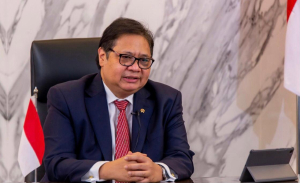
Coordinating Minister for the Economy, Airlangga Hartarto, flew directly to Washington, D.C. after accompanying President Prabowo Subianto at the 2025 BRICS Summit in Brazil, in a bid to engage U.S. officials over the newly announced trade measures.Airlangga is scheduled to meet with representatives of the U.S. government to discuss the implications of the tariff decision.
“Although the tariffs have been announced, the U.S. side has indicated there is still room for diplomacy and negotiation,” ministry spokesman Haryo Limanseto saidin a written statement released on Tuesday, July 8, 2025.
President Trump, in a letter posted on his Truth Social account and later cited by CNBC International, named Indonesia among 14 countries that will face new or increased tariffs starting August 1, 2025. Indonesian imports will be subject to a 32 percent tariff, higher than several other countries listed.
Bangladesh and Serbia will face 35 percent, while Kamboja and Thailand 36 percent. The steepest increases are directed at Laos and Myanmar, with 40 percent.
“These tariffs are intended to address the persistent U.S. trade deficit with the listed countries,” the letter stated, while also warning against retaliation.
The administration said any reciprocal tariff increases would be met with an additional 25 percent levy on U.S. exports. However, the statement also left the door open for adjustments depending on future bilateral relations.
“Tariffs may be changed, up or down, depending on our relationship with your country,” the letter read.
A White House press briefing on Monday, July 7, 2025 confirmed that Trump signed an executive order delaying the initial July 9 implementation to August 1, citing “new information and senior official recommendations.”
The tariffs apply separately from existing product-specific duties and target a broad range of imports. The U.S. administration also warned against “re-routing” goods through third countries to avoid the tariffs, stating such practices would still be subject to the same penalties.
Indonesia’s rapid response, spearheaded by Airlangga’s direct diplomatic outreach, aims to safeguard national economic interests and avoid disruption to trade flows. The government emphasized the importance of dialogue in resolving trade disputes and expressed hope that the tariff decision could still be reconsidered.
“This is a crucial step to mitigate the impact on Indonesia’s exports and broader economy, and to preserve the strength of our bilateral trade relationship,” Haryo said. “We intend to fully utilize this opportunity to defend our national interests and prevent long-term damage.”
The trade stand-off comes at a sensitive time as Indonesia seeks to expand its export markets and solidify its role in global supply chains. Washington’s move also signals a more aggressive trade posture under Trump’s renewed leadership, echoing tactics used during his first term in office.
The outcome of Airlangga’s visit to Washington will likely determine the trajectory of U.S.-Indonesia trade relations in months ahead.
Already have an account? Sign In
-
Start reading
Freemium
-
Monthly Subscription
20% OFF$29.75
$37.19/MonthCancel anytime
This offer is open to all new subscribers!
Subscribe now -
Yearly Subscription
33% OFF$228.13
$340.5/YearCancel anytime
This offer is open to all new subscribers!
Subscribe now
Set up email notifications for these topics