


The recent release of 2025 Electricity Supply Business Plan (RUPTL) is a vital milestone in the nation’s energy transition, but serious implementation gaps and misalignments with climate commitments remain, according to Dody Setiawan, Senior Climate and Energy Analyst at EMBER.
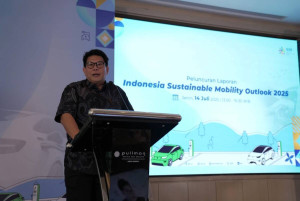
“RUPTL remains the core legal reference for electricity development. Without it, neither (State power utility) PLN nor the private sector can move forward,” Doddy said in a public discussion in Jakarta on Thursday, June 26, 2025.
He noted that while many energy planning documents exist, such as the NZE Roadmap and the Comprehensive Investment Policy Plan, RUPTL’s legal basis makes it irreplaceable. He underscored that prior to the pandemic, the RUPTL was updated annually, which provided critical certainty for developers and investors. However, following the 2021 release, no updates were issued for three years, creating a vacuum.
The importance of annual updates, he argued, lies not only in adjusting to evolving demand and supply scenarios, but also in refreshing the project pipeline. Projects that have stalled, become obsolete, or newly emerged need to be included or adjusted accordingly. He cited the 35 GW program launched in 2015 as an example, where the original targets had to be rescheduled due to lower-than-expected economic growth and electricity demand.
Another key reason for updating RUPTL regularly, according to him, is to provide confidence to investors.
“Most of the capital investment in power generation comes from the private sector. If they don’t see clarity and predictability in planning documents like RUPTL, they won’t invest,” Doddy said.
Moreover, delays in RUPTL updates cast doubts on Indonesia’s climate commitment.
“Since 2021, the capacity of renewable energy in planning has surpassed that of fossil fuels. But if we don’t update the RUPTL, people question whether we’re truly serious about decarbonization,” he added.
Doddy recalled that the 2021 RUPTL was often branded the “green RUPTL” because of its renewable-heavy targets. However, he cautioned that the plan leaned heavily on a “big but” − with most of the renewable capacity slated for the second half of the planning period. Between 2021 and 2024, fossil fuel capacity actually grew by 14 GW, while renewables only added about 5 GW. In contrast, nearly 74 percent of renewable capacity additions were projected between 2025 and 2030, showing a trend of back-loading renewable expansion.
Even more concerning was the shortfall in actual implementation. He pointed to a major gap in solar and wind power deployment. Solar PV (PLTS) had a cumulative target of around 4 GW by 2024, yet installed capacity remained under 1 GW, with an annual average addition of only 174 MW.
“This figure is critical because the 2025 RUPTL now expects over 860 MW of renewable additions per year − five times the current pace,” he noted. Wind power (PLT Bayu), meanwhile, has seen zero capacity additions since 2021 despite a target of 400 MW.
In terms of planning structure, Doddy highlighted that the new RUPTL still follows a familiar pattern. Most of the renewable capacity, roughly 68 percent, will be added after 2030. In contrast, the first five years focus heavily on fossil-based plants, mostly gas.
“This mirrors the 2021 RUPTL, and when we compare capacity projections between 2025–2029, we see that renewable additions are actually lower in the new plan. Some have likely been pushed further back and replaced by new fossil fuel projects,” he cited.
Implications
Doddy also drew attention to Indonesia’s broader long-term energy planning documents, including National Electricity General Plan (RUKN) and the Long Term Strategy for Low Carbon and Climate Resilience (LTS LCCR). EMBER’s research, published in early 2025, shows that the RUKN projects coal power to peak in 2037, far beyond the pre-2030 peak needed to align with the Paris Agreement.
“This has serious implications. It means emissions from the power sector will reach nearly 600 million tons CO2e by 2037 − up 37 percent from today,” he said.
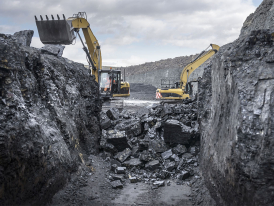
Coal consumption would also rise by 62 percent to almost 300 million tons, with methane emissions from coal mining jumping by the same percentage.
Doddy stressed the significance of methane emissions from coal extraction.
“Methane is 82 times more potent than CO2 in terms of warming potential. And coal mine methane is often ignored in planning discussions. That has to change,” he said.
Critical measures
Doddy emphasized that the 2025 RUPTL must now be treated as a reference for moving forward, asking PLN and stakeholders to take several critical steps.
First, the need for transparent and detailed procurement timeline, working backwards from the COD targets to ensure enough time for project development.
“Procurement ideally should start three years before COD. Otherwise, delays are almost certain,” he said.
Second, the need to simplify procurement processes, especially for projects of smaller scale. He stressed the need to involve local Indonesian entrepreneurs, not just large foreign developers, to build a more inclusive renewable energy sector.
Finally, the need for regular updates to the RUPTL to better track project status and progress.
“We need more frequent revisions to reflect the real situation − whether a project is delayed, needs replacement, or can be accelerated,” he said.
Already have an account? Sign In
-
Start reading
Freemium
-
Monthly Subscription
20% OFF$29.75
$37.19/MonthCancel anytime
This offer is open to all new subscribers!
Subscribe now -
Yearly Subscription
33% OFF$228.13
$340.5/YearCancel anytime
This offer is open to all new subscribers!
Subscribe now
Set up email notifications for these topics