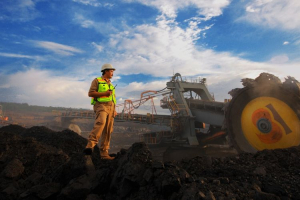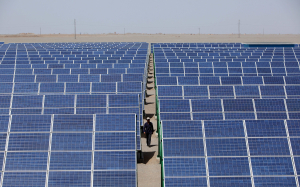



Indonesia holds the world’s second-highest potential for solar energy development on former and soon-to-be-depleted coal mine lands, with an estimated capacity of 59.45 gigawatts (GW), according to a new report from Global Energy Monitor (GEM). Yet, to date, the country has only announced plans to develop 600 megawatts (MW) of solar projects on such sites.
The findings were published in GEM’s latest report, “Bright Side of the Mine: Solar’s Opportunity to Reclaim Coal’s Footprint”, which identifies 446 coal mines across the globe − including 26 in Indonesia − that are either already inactive or expected to shut down by 2030. These sites could collectively host up to 300 GW of solar capacity, equivalent to 15 percent of today’s global solar output.
“Coal’s legacy is written into the land, but that legacy does not have to define the future,” Cheng Cheng Wu, Project Manager of the Energy Transition Tracker at GEM, said on Wednesday, June 18,2025 .
“The coal-to-solar transition is underway, and this potential is ready to be harnessed in coal-producing countries like Australia, the United States, Indonesia, and India,” he added.
Untapped potential
GEM’s analysis estimates that 1,190 square kilometers of coal mining land in Indonesia could be repurposed for solar development, particularly in South and East Kalimantan where mine closures are expected within the next five years. If fully utilized, these lands could produce nearly 60 GW of solar capacity − 100 times more than current planned projects.
Despite this vast potential, development remains minimal. State-owned miner PT Bukit Asam announced plans to build solar power plants at three former mine sites in West Sumatra, South Sumatra, and East Kalimantan − each with 200 MW, 200 MW, and 30 MW capacities respectively. However, no significant progress has been reported since the projects were initially announced in 2021 and reaffirmed in 2023.
Clean energy and economic transition
GEM argues that transforming mine sites into solar power hubs is not only feasible but strategically beneficial. These lands are typically vacant, located near transmission networks, and surrounded by labor pools with relevant skills. Moreover, such a transformation could create 259,700 permanent jobs and an additional 317,500 construction-related roles − exceeding the number of coal jobs projected to be lost globally by 2035.
“The reuse of mine sites for solar development offers a rare chance to align land recovery, local job creation, and clean energy deployment in a single strategy,” Cheng Cheng Wu said. “With the right choices, the same land that powered the industrial era can help power the climate solutions we desperately need today”.
Policy and investment reforms
However, the path forward requires significant policy reforms. GEM calls for regulatory frameworks that prioritize renewable development on mine land, investment strategies that integrate land reclamation with solar expansion, and mechanisms to center local employment and community voices in the process.
“We’ve seen what happens to coal communities when companies go bankrupt − workers laid off and landscapes left behind,” Ryan Driskell Tate, Associate Director at GEM, said. “But these lands hold enormous promise for a renewable future. We just need the right mix of incentives to catalyze solar development in mining regions”.
Already have an account? Sign In
-
Start reading
Freemium
-
Monthly Subscription
20% OFF$29.75
$37.19/MonthCancel anytime
This offer is open to all new subscribers!
Subscribe now -
Yearly Subscription
33% OFF$228.13
$340.5/YearCancel anytime
This offer is open to all new subscribers!
Subscribe now
Set up email notifications for these topics