


Indonesia is taking a major step toward expanding its renewable energy portfolio with the construction of the country's first ocean current power plant (PLTAL).
The project, valued at US$220 million (Rp3.57 trillion), is expected to generate 40 megawatts (MW) of clean energy and is included in the government’s 2025–2034 Electricity Supply Business Plan (RUPTL).
According to the Directorate General of New, Renewable Energy, and Energy Conservation (EBTKE) at the Ministry of Energy and Mineral Resources (ESDM), the project will be developed in East Nusa Tenggara, with two locations each contributing 20 MW of installed capacity.
“This is one of our efforts to support the energy transition, enhance energy resilience and self-sufficiency, and sustainably utilize Indonesia’s rich marine resources,” the EBTKE directorate general said in an Instagram post on Monday, June 16, 2025.
The project will be implemented in collaboration with international partners: SBS Indonesia (UK), NOVA Innovation (UK), which is working alongside PT Pertamina Power Indonesia, and Tidal Bridge from the Netherlands. These companies are known for pioneering marine renewable energy technologies.
The development plan highlights five marine-based technologies being considered for ocean energy power generation:
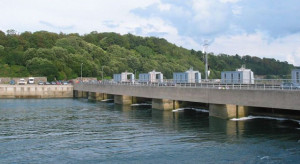
● Tidal Power – Harnessing tidal movements through tidal dams and offshore turbines;
● Wave Energy – Capturing surface wave energy using wave power systems and Oscillating Water Column (OWC) devices;
● Ocean Current Power – Utilizing undersea currents via vertical and horizontal axis turbines;
● Ocean Thermal Energy Conversion (OTEC) – Tapping the temperature gradient between surface and deep seawater using open and closed-cycle systems;
● Salinity Gradient Power – Exploiting the salt concentration difference between freshwater and seawater.
National renewable push
The PLTAL initiative is part of Indonesia’s broader strategy to achieve a 69.5 gigawatt (GW) increase in power capacity by 2034. Under this plan, renewables and energy storage are expected to make up 76 percent of all new power plants, as outlined by the ESDM ministry.
The renewable and storage targets include:
Renewables (42.6 GW):
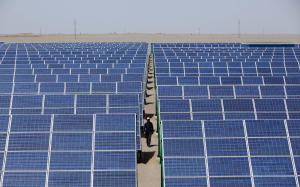
● Solar: 17.1 GW;
● Hydro: 11.7 GW;
● Wind: 7.2 GW;
● Geothermal: 5.2 GW;
● Bioenergy: 0.9 GW;
● Nuclear: 0.5 GW.
Energy Storage (10.3 GW):
● Battery systems: 6 GW;
● Pumped hydro: 4.3 GW.
Fossil fuels (16.6 GW):
● Natural gas: 10.3 GW;
● Coal: 6.3 GW.
Indonesia’s marine economy
Indonesia, as the world’s largest archipelagic state, holds vast potential for ocean-based renewable energy. The development of PLTAL marks a pioneering effort to convert the country's natural marine flows into a dependable source of electricity.
By integrating advanced marine technologies into its power system, Indonesia not only moves closer to energy independence, but also sets a precedence for other coastal nations seeking sustainable power solutions.
Already have an account? Sign In
-
Start reading
Freemium
-
Monthly Subscription
20% OFF$29.75
$37.19/MonthCancel anytime
This offer is open to all new subscribers!
Subscribe now -
Yearly Subscription
33% OFF$228.13
$340.5/YearCancel anytime
This offer is open to all new subscribers!
Subscribe now
Set up email notifications for these topics