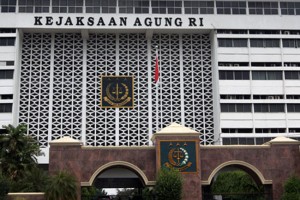


As the Attorney General’s Office (AGO) is investigating corruption allegations in the Rp9.9 trillion (US$609 million) laptop procurement project at the Ministry of Education during a period of 2020–2022, civil society groups ask the AGO to thoroughly probe the case up to the highest individual responsible for its procurement.
The Indonesia Corruption Watch (ICW) and legislative watchdog KOPEL allege the procurement was forcibly implemented despite objections from the ministry’s internal technical teams. These teams had reportedly deemed Chrome OS unsuitable for Indonesia’s digital education program due to internet dependency.
“This laptop procurement has been riddled with irregularities from the start, from the forced technical specifications to a lack of transparency in the planning process,” Almas Sjafrina, an ICW researcher, said on Wednesday, June 11, 2025.
“We ask the Attorney General’s Office not to stop at investigating ministerial staff but to thoroughly examine the Procurement Commitment Officer (PPK), budget users, and then-Minister Nadiem Makarim as the official in charge of the program,” she emphasized.
Both ICW and KOPEL Indonesia questioned the AGO’s focus solely on special staff, noting that they do not hold legal authority over procurement execution. The central role, they argue, lies with the PPK and authorized budget officials, under direct accountability to the minister.
The groups also highlighted that the operating system and specifications were directly stated in Ministerial Regulation No. 5/2021, signed by Nadiem Makarim. They argued that the project, as a flagship initiative, deserved stronger internal oversight given its budget and public impact.
The groups also claimed to have raised red flags as early as 2021. Back then, they asked the Education Ministry to halt and reassess the program, citing its questionable urgency and improper use of state funds during the COVID-19 pandemic.
Procurement irregularities
In their 2021 study, ICW and KOPEL highlighted several red flags:
* The laptop procurement, funded partly by the Special Allocation Fund (DAK), allegedly violated Presidential Regulation No. 123/2020, which requires DAK planning to be bottom-up and transparent.
* The program was absent from the official SiRUP procurement planning system, limiting public oversight.
* The requirement for Chrome OS laptops ignored the infrastructure limitations in Indonesia’s underdeveloped and remote regions (3T), where internet connectivity is poor.
* Only a handful of suppliers met the narrow specifications − Zyrex, Advan, Evercoss, Supertone, Acer, and Axio − which critics argue could indicate unfair market practices and monopolistic behavior.
ICW and KOPEL called on the AGO to expand the investigation to include the PPK, budget officials, and former Minister Nadiem Makarim. They also asked the AGO to disclose clear information on the type of corruption involved and the estimated state losses.
ICW and KOPEL simultaneously asked the Ministry of Education to evaluate and publish the results and extent of the 2019–2024 digitalization program, including laptop distribution data.
“The use of public funds must be transparent and accountable,” ICW said, while stressing that ministerial changes do not absolve institutional responsibility.
Already have an account? Sign In
-
Start reading
Freemium
-
Monthly Subscription
20% OFF$29.75
$37.19/MonthCancel anytime
This offer is open to all new subscribers!
Subscribe now -
Yearly Subscription
33% OFF$228.13
$340.5/YearCancel anytime
This offer is open to all new subscribers!
Subscribe now
Set up email notifications for these topics