


Minister of Energy and Mineral Resources (ESDM), Bahlil Lahadalia, has claimed that the sharp decline in national oil production was not merely a result of depleting natural resources, but also a possibly deliberate move.
His remarks raise serious concerns about the country’s energy independence amid rising oil consumption.
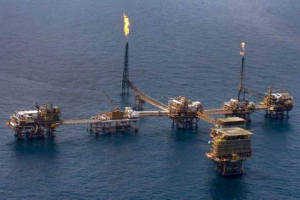
“Our oil lifting in 2024 only reached 580,000 barrels per day, while our consumption is 1.6 million barrels per day,” Bahlil said in a Energy and Mineral Forum in Jakarta on Monday, May 26, 2025.
“This is a complete reversal from the conditions we had in 1996–1997,” he added.
Bahlil questioned whether Indonesia had truly run out of natural resources or if the production drop was orchestrated. “Honestly, in the name of God, I believe there is a deliberate element − a design − behind this,” he said.
He pledged to uphold the directive of President Prabowo Subianto to secure Indonesia’s energy future. “For the sake of the President’s orders and our motherland, I will not back down even an inch in confronting those responsible,” Bahlil affirmed.
The minister’s statement comes amid mounting concerns over Indonesia’s growing dependence on imported oil and its implications for national energy security.
Gas networks
On the same occasion Bahlil Lahadalia revealed that the Indonesian government plans to accelerate the development of household gas pipeline networks (jargas) to reduce dependence on imported liquefied petroleum gas (LPG).
“Besides converting LPG to DME (dimethyl eter), we must expand the gas network because it is significantly cheaper,” Bahlil said. “Per kilogram, if converted, it only costs around 7,000 to 8,000 rupiah (43 to 49 US cents). That’s nearly a 100 percent price difference.” he added.
The expansion of the gas network system is underway in several areas through State energy company Pertamina and its subsidiary PGN. Bahlil emphasized that the government aims to further build gas infrastructure across key regions.
“At the minimum, we can develop it in East Java, West Java, parts of Sumatra, Jakarta, parts of Kalimantan, and Sulawesi,” he said. “Besides reducing our imports, it will also generate efficiency.”
The move is part of a broader strategy to enhance national energy resilience and lower the fiscal burden caused by LPG subsidies and import costs.
Already have an account? Sign In
-
Start reading
Freemium
-
Monthly Subscription
20% OFF$29.75
$37.19/MonthCancel anytime
This offer is open to all new subscribers!
Subscribe now -
Yearly Subscription
33% OFF$228.13
$340.5/YearCancel anytime
This offer is open to all new subscribers!
Subscribe now
Set up email notifications for these topics