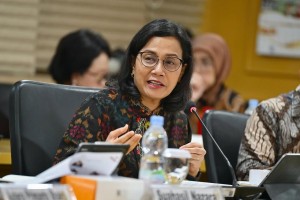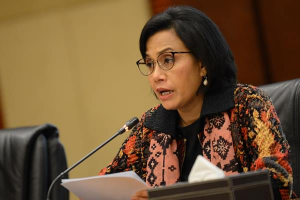



Minister of Finance Sri Mulyani Indrawati revealed on Tuesday, May 20, 2025 the government’s 2026 macroeconomic framework and fiscal policy guidelines (KEM PPKF), projecting national economic growth to reach between 5.2 and 5.8 percent next year.
Addressing a plenary session of the House of Representatives (DPR) in Jakarta, Sri Mulyani said the growth projection aims to preserve purchasing power while accelerating structural economic reforms, including natural resource downstreaming, investment climate improvement, and human capital development.
“We are projecting this growth while maintaining household consumption, encouraging economic transformation and reform, and improving the investment ecosystem and the quality of our human resources,” she told reporters after the seassion.
The 2026 target exceeds the government's growth estimate for 2025, which stands between 5.1 and 5.5 percent, as outlined in the earlier fiscal policy statement. However, the lower bound of the 2026 projection remains unchanged from the 5.2 percent growth target set in the 2025 state budget (APBN).
Sri Mulyani emphasized that the 2026 fiscal framework was formulated based on an ongoing evaluation of ministries’ and agencies’ performance in the current fiscal year, and that such assessments would be key in shaping next year’s budget.
“There are still about two months left in this evaluation process, and the ministries’ efficiency and performance will be taken into account in determining the 2026 state budget ceilings,” she said.
Food security, clean energy
Sri Mulyani stressed that food production would be a primary focus of the 2026 state budget, especially in boosting domestic supply of rice, corn, milk, and meat to reduce dependency on imports.
“This includes support for fertilizer subsidies, farming equipment aid, land expansion, superior seed distribution, and strengthening the role of State logistics agency (Bulog) to ensure food price stability,” she noted.
Ensuring consistent food supply while improving the welfare of farmers and fishers remains a persistent challenge, she added, vowing to improve their access to financing and bolster national food reserves.
“The APBN will also continue to facilitate financing access for farmers, fishers, and small businesses, while reinforcing national food storage systems,” she cited.
On energy policy, the government plans to advance its transition from B40 to B50 biodiesel, supported by fiscal incentives. This will involve infrastructure investment, biofuel distribution, vehicle technology testing, and the development of a renewable energy ecosystem.
“The government will also expand investment in clean energy projects such as solar, hydro, geothermal, and waste-to-energy,” she stated.
These priorities, she said, align with President Prabowo Subianto’s goal to push annual economic growth to 8 percent by 2029 and support Indonesia’s long-term development vision for 2045.
Already have an account? Sign In
-
Start reading
Freemium
-
Monthly Subscription
20% OFF$29.75
$37.19/MonthCancel anytime
This offer is open to all new subscribers!
Subscribe now -
Yearly Subscription
33% OFF$228.13
$340.5/YearCancel anytime
This offer is open to all new subscribers!
Subscribe now
Set up email notifications for these topics