


Indonesia Business Post
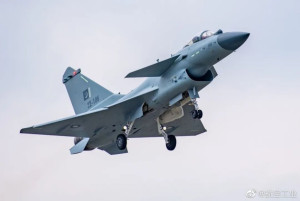
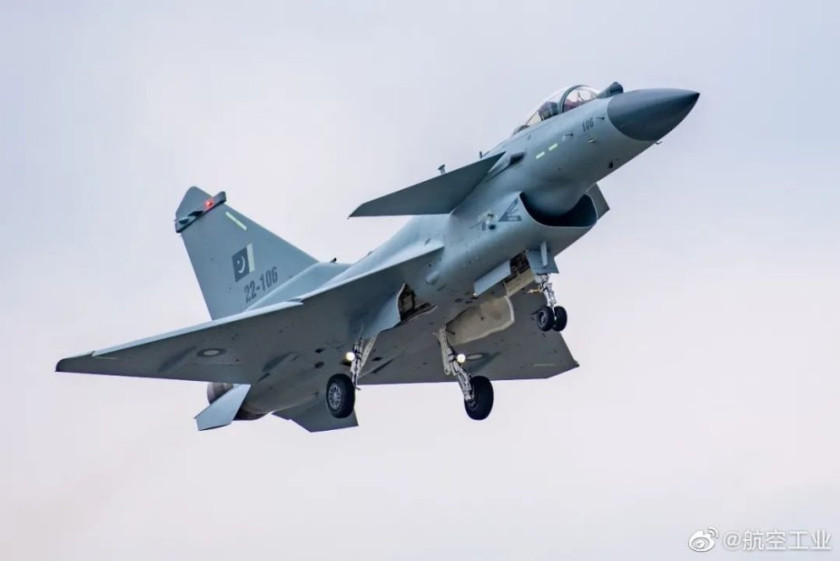
Pakistan's dominance in air combat against India is in the spotlight, but the superiority of the Chinese-made J-10C fighter jet in the incident was not merely a matter of technology, but the result of a combination of mature military strategy, pilot skills, and integration of advanced combat systems, analysts said.
Alman Helvas Ali, an analyst with security and defense consultancy firm PT Semar Sentinel, emphasized that Pakistan's superiority was not because the J-10C aircraft was technically superior to the Indian Rafale.
"This is not just a matter of technology. The main problem is tactics and operational readiness," Alman told Indonesia Business Post in an interview on Tuesday, May 13, 2025.
He cited that Pakistan intelligently utilized the Airborne Warning and Control System (AWACS) to provide situational awareness to their pilots. This allowed the J-10 pilots to know the position of the Indian Rafale in advance.
Meanwhile, the Indian Rafale was considered not yet fully ready in terms of the system, especially in terms of secure communications and modern data links,such as frequency hopping.
"The Indian Rafale is not yet ready for full rotation. There are still gaps in the communication system and integration between weapons," Alman said.
On the other hand, Pakistani pilots are said to be more trained in long-range air combat or Beyond Visual Range(BVR), thanks to their experience serving in the Air Forces of Gulf countries, such as Saudi Arabia and Qatar.
A researcher from the International Institute for Strategic Studies (IISS), Douglas Barrie, added that the international air defense community is now very interested in studying the tactics used by Pakistan. "They want to know the procedures, equipment, and what works in this air combat," he was quoted as saying by Reuters, on Tuesday, May 13, 2025
China, as the supplier of the J-10C, has equipped the jet with an Electronic Active Scanned Array (EASA) radar system, a signal jamming device, and a PL-15E missile with a speed of five times the speed of sound. The high-precision navigation and guidance system allows the J-10C to attack targets with high accuracy.
"In terms of missile tracking, China's capabilities are more advanced," Alexander Neill of the Pacific Forums said.
The J-10C is also designed with the latest technology based on supercomputers and artificial intelligence. Equipped with 11 weapon loading points, this jet is capable of carrying various air-to-air missiles such as PL-8, PL-10, PL-12, to PL-15, as well as KD-88 and YJ-91 air-to-surface missiles.
This incident shows that superiority in modern airspace is not only determined by the quality of the aircraft, but by the integration of weapons systems, operational tactics, and personnel skills. An important lesson for other countries, including Indonesia, in strengthening their air defenses in the era of long-range combat and electronic warfare.
Indonesian context
Efforts to modernize Indonesia's air weapons system face major challenges in terms of integrating communication and data exchange between fighter aircraft.
Alman suggested that Indonesia needs to immediately develop its own data link system to overcome the limitations of interoperability of defense equipment from various countries.
He cited that currently the Indonesian Air Force’s (TNI AU) F-16 aircraft use Link 16, a NATO standard military data link system that allows real-time information exchange between aircraft and command centers. However, this system has limitations because it cannot be connected to other fighter jets, such as the French-made Rafale.
"Our F-16 already uses Link 16, but it cannot be integrated with other aircraft, including the Rafale. Because America does not allow other systems to be installed on the F-16," Alman said.
This condition is considered to hamper the effectiveness of joint operations and weaken situational awareness in air combat.
"America only allows Link 16 to be used on the F-16. So integration between fighter jets with different systems is very limited," he continued.
To overcome this problem, Alman encouraged Indonesia to start developing an independent data link system. This system must be able to bridge various communication protocols from various types of aircraft, whether made in America, Europe, or other countries.
"In theory, we should have our own data link. One that can integrate Link 16 on the F-16, the Rafale data link, and other aircraft. This is a big job ahead," he said.
The development of an independent defense communication system will be a strategic step in increasing the independence of national military technology.
In addition, this also strengthens Indonesia's position in facing increasingly complex global geopolitical dynamics.
Amid increasing modern air threats and the importance of cross-platform operations, data link system integration is one of the main pillars in creating effective and responsive air power.
"The government and domestic defense industry are expected to immediately take concrete steps in developing this technology," Alman concluded.
Already have an account? Sign In
-
Start reading
Freemium
-
Monthly Subscription
20% OFF$29.75
$37.19/MonthCancel anytime
This offer is open to all new subscribers!
Subscribe now -
Yearly Subscription
33% OFF$228.13
$340.5/YearCancel anytime
This offer is open to all new subscribers!
Subscribe now
Set up email notifications for these topics