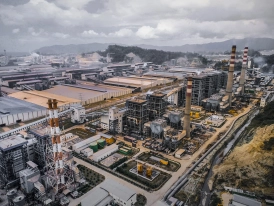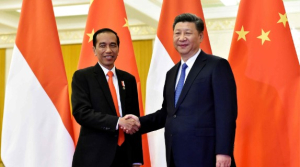



The Jakarta Defense Society (JDS) on Thursday, November 4, 2025, convened a public forum to address the escalating national debate surrounding the Morowali Industrial Park (IMIP) and the status of an airport operating within the industrial zone.
As national scrutiny intensifies, calls have mounted on the government to strengthen cross-agency coordination to ensure that Indonesia’s economic interests do not compromise sovereignty or security.
The discussion, moderated by JDS founder Ade Marboen, brought together aviation expert Gerry Soejatman and defense politics analyst Selamat Ginting, who offered contrasting yet intersecting insights into the issue.
Responding to concerns that the IMIP airport operates beyond government supervision, Gerry rejected the notion that the facility functions as a “state within a state.”
He emphasized that aircraft movements remain under the authority of the Transportation Ministry, with flight permits issued through standard procedures and airspace monitored by air traffic control (ATC).
“From the aviation side, nothing is unmonitored. If an aircraft enters without permission, ATC reports it immediately to Koorhanud [Air Defense Command],” he said.
Regarding foreign nationals, Gerry noted that the responsibility lies with immigration authorities, who are empowered to enter the industrial park. “If they're not present, that’s a question for the relevant agencies. This is not an aviation oversight issue,” he added.
Gerry also dismissed speculation that foreign aircraft regularly enter the facility without clearance. “I haven't found a single case of foreign aircraft landing without permission. Even with permission, there hasn't been one. All flights pass through other Indonesian airports,” he said.
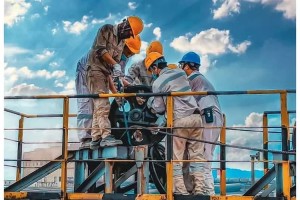
While downplaying the aviation concerns, he acknowledged broader national security risks associated with the dense concentration of foreign workers numbering in the tens of thousands within IMIP.
“This is a national vital object. Ideally, there should be a Indonesian Military (TNI) presence. If people say ‘just shut it down,’ that’s unrealistic. You can’t suddenly send tens of thousands of foreign workers home. That would cause real security chaos,” he argued.
He cautioned against what he called “noise and trash arguments” that distract from designing a workable solution.
“Closing the park isn’t a solution. Letting everything run unchecked isn’t a solution either. We need a middle ground ‒security, economy, and governance must sit together without the political noise,” he said.
Security vulnerability
Selamat Ginting offered a broader analysis, linking concerns about IMIP to global patterns observed in Chinese funded industrial projects across developing countries.
He noted a recurring issue: the presence of Chinese nationals allegedly entering host countries on temporary visas rather than through formal labor channels, often accompanied by wage imbalances that trigger social friction.
“In IMIP, Indonesian workers earn around Rp6–7 million, while Chinese workers reportedly receive around Rp 35 million. This is not just administrative this is a social and legal vulnerability,” he said.
Ginting drew parallels with Vietnam, where similar disputes over working conditions and foreign labor governance have sparked social unrest. He warned that Morowali faces comparable risks.
He also highlighted environmental and public health impacts stemming from smelters and heavy industry in the park, all of which intensify tensions with local communities.
“These conditions ‒ labor, environmental hazards, weak regulation ‒ can turn into a security issue. That is how the defense sector evaluates Morowali,” he said.
Public anxiety escalated after the governor of Central Sulawesi claimed he was denied access to parts of the IMIP area. The incident fueled allegations that the industrial zone operates outside government jurisdiction.
“Entry restrictions on a governor naturally raise questions about sovereignty,” Ginting said. “This is why the DefenseMinistry and Commission I of the House of Representatives are reacting strongly.”
He argued that the core concern is the possibility of foreign nationals entering through IMIP’s airport without proper immigration and customs oversight—an opening that could be exploited in ways detrimental to national security.
When asked why the controversy has surged only recently despite long-standing concerns, Ginting suggested it relates to developments within the first year of the Prabowo administration.
“Government agencies have been observing this for a year. The momentum to bring it to the national stage arrived only now. Past allegations such as unexplained radar blackouts and foreign flights entering without clearance were once dismissed as political attacks. But current statements indicate intelligence validation behind those concerns,” he said.
He hinted that the Air Force has long harbored suspicions regarding activity around the IMIP airport. “From what I hear, this isn’t new. The difference is that now, the intelligence assessments are being taken seriously.”
Both speakers agreed that Morowali and IMIP represent more than a dispute over aviation permits. The cluster embodies intertwined challenges security, sovereignty, labor rights, immigration enforcement, environmental governance, and economic dependency.
“IMIP isn’t just an airport issue. It’s a strategic zone with national-level implications,” Ginting said.
Already have an account? Sign In
-
Start reading
Freemium
-
Monthly Subscription
20% OFF$29.75
$37.19/MonthCancel anytime
This offer is open to all new subscribers!
Subscribe now -
Yearly Subscription
33% OFF$228.13
$340.5/YearCancel anytime
This offer is open to all new subscribers!
Subscribe now
Set up email notifications for these topics